
- bhutan has huge summer hydropower surplus, one buyer (india) paying very little for it, and a winter shortfall it has to buy back at higher prices.
- from april 2019, druk holding & investments (dhi), the state investment arm, quietly mined bitcoin with that surplus. forbes found the sites by satellite in late 2023.
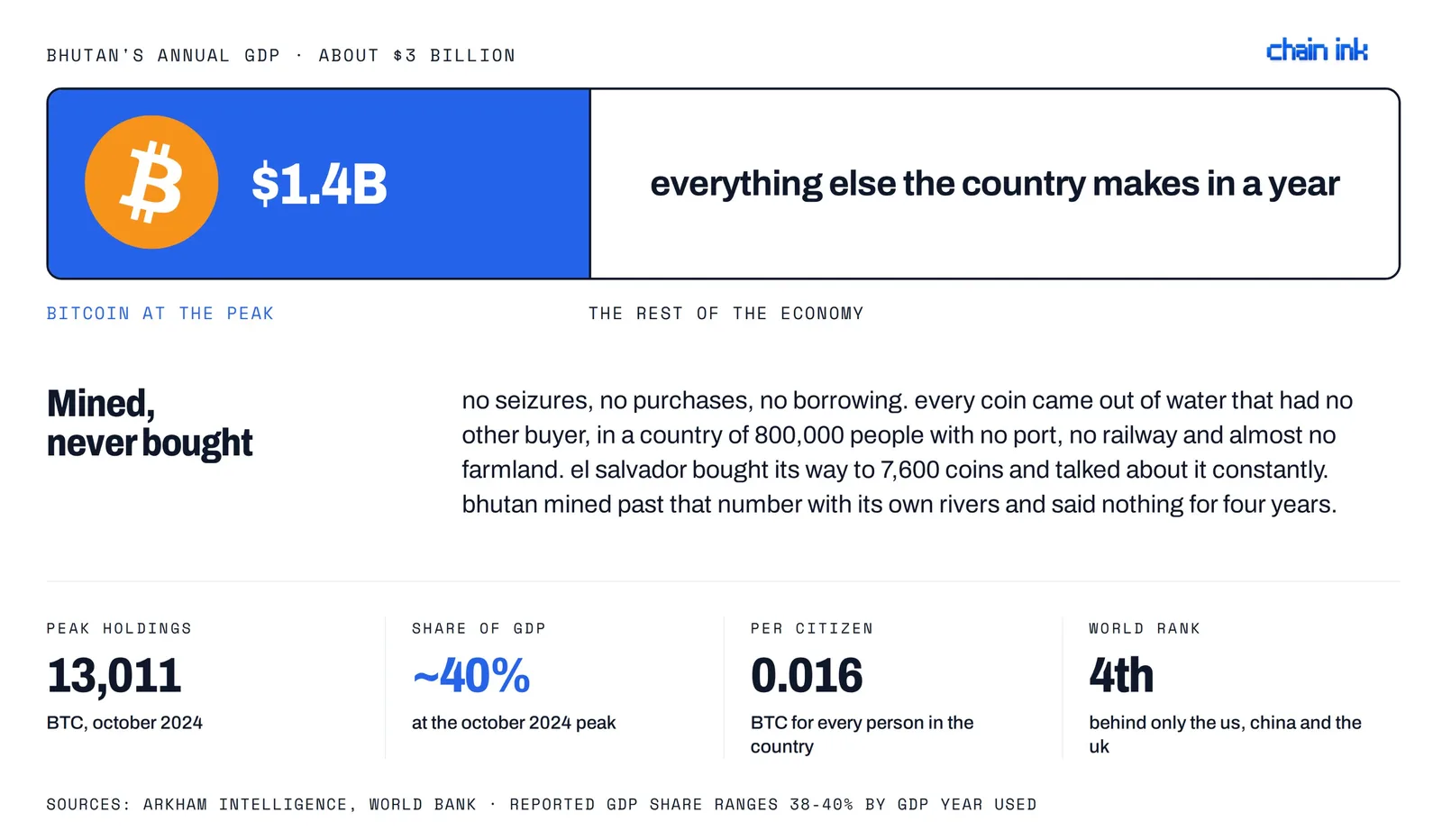
- every coin was mined, none bought or seized. the stack peaked at 13,011 btc in october 2024, about 40% of gdp and 4th among governments.
- a $500m fund with bitdeer adds 600 mw of mining, and the coins have been spent on civil servant pay rises and power bills since mid-2024.
- the endgame is gelephu mindfulness city, which says it wants to turn summer hydro into bitcoin and back into power or imports when needed.
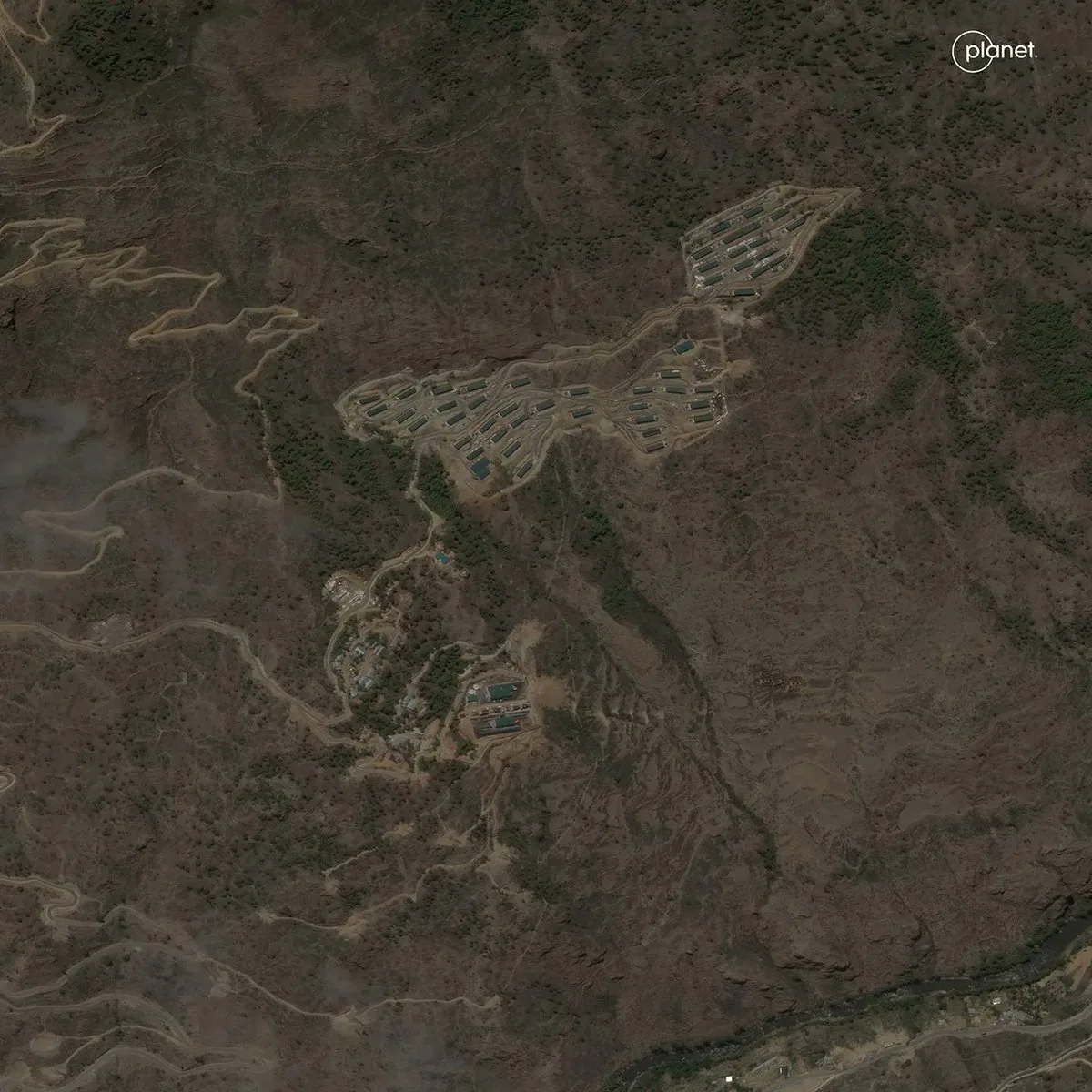
a satellite passed over a dead university campus in the himalayas.
the classrooms were never built. long metal sheds stood where they should have been, and inside them, tens of thousands of machines were mining bitcoin for a country that had never said a word about it.
that country was bhutan. 800,000 people, no port, no railway.
at its peak, it was sitting on a bitcoin stack worth close to 40% of its entire economy.
the photo that gave it away
in late 2023, forbes pieced it together with imagery from planet labs, satellite vu and google earth. four sites. rows of rectangular mining units, cooling systems, and heavy power lines running from the hydro plants straight into the forest.
one of them sat on the grounds of education city, a flagship project the government shut down in 2014. the roads, bridges and power lines stayed behind. somebody found a use for them.
earthmoving on that site started in 2020. by late 2022 the build looked finished.
druk holding & investments, the state's investment arm, confirmed the mines existed. where they were, it would not say.
a country with one buyer
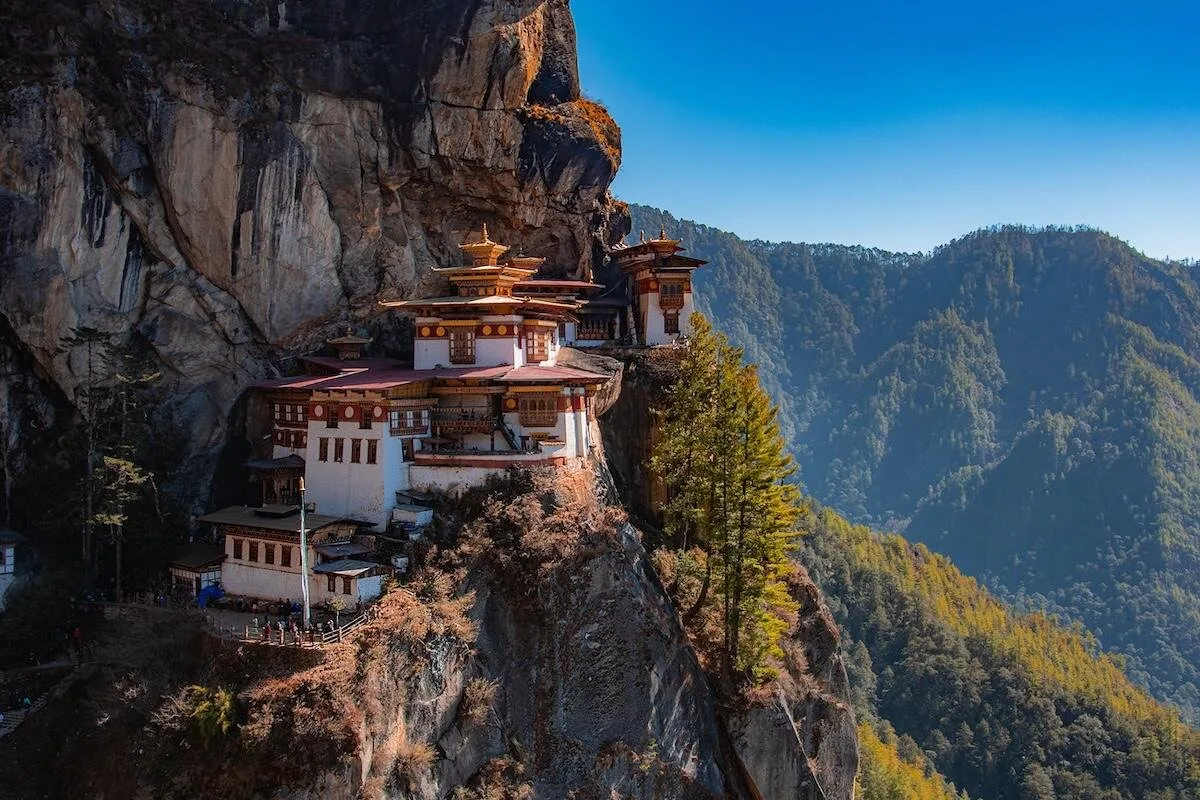
to understand why a buddhist kingdom would quietly become a miner, start with the map.
bhutan is wedged between india and china. the land runs vertical. there is almost nothing flat enough to farm and no coast to ship from.
what it has is water. snowmelt and monsoon rain falling through steep valleys, which makes it one of the best places on earth to build a hydro dam.
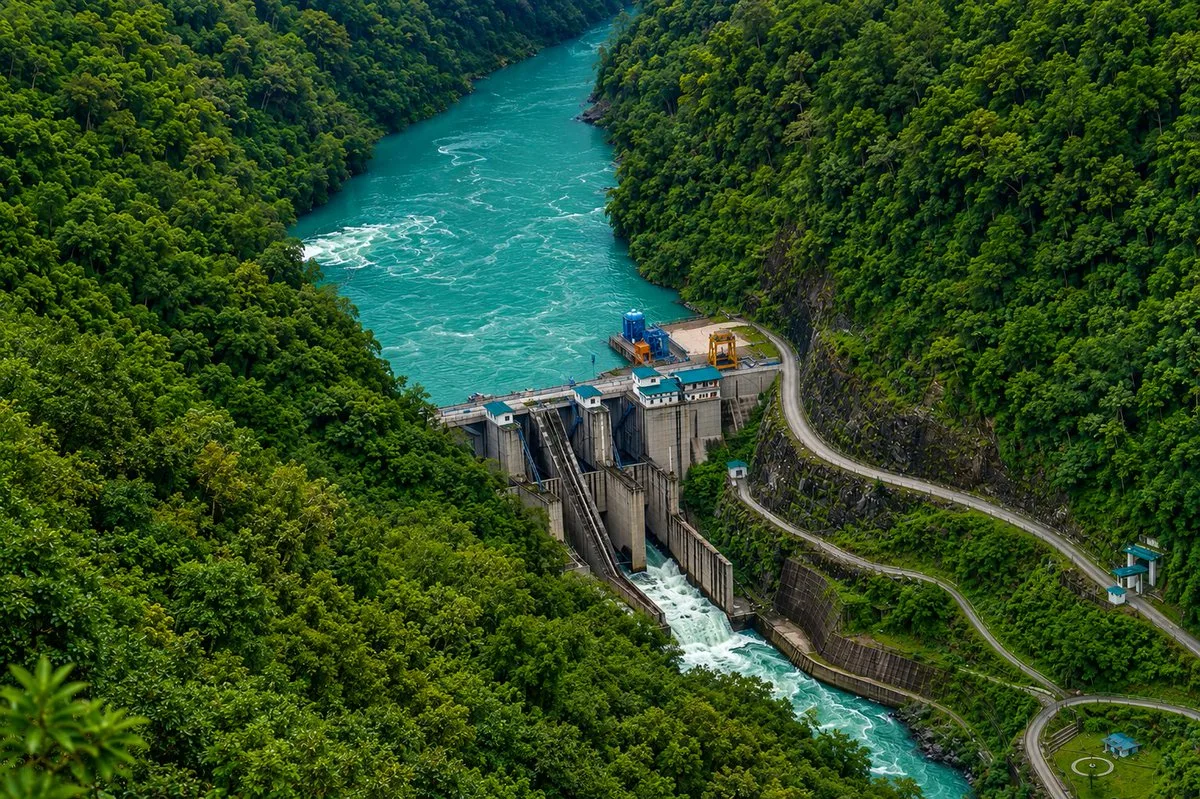
so bhutan built them, largely with indian help, and sold the power across the border. electricity became the spine of the export economy.
- 2025 exports: 7,712 million units
- earned: about nu 24.7 billion the problem is who sits on the other end of the wire. one customer, india, and as of 2025, some of the oldest contracts still paid around nu 2.23 a unit. that is roughly 2.3 cents.
six months rich, six months buying
the rivers don't flow evenly.
in summer, snowmelt pushes generation far past anything the country can use. the 2025 summer peak hit about 3,600 MW against demand of roughly 900 to 1,000 MW.
in winter the rivers shrink, output falls off a cliff, and bhutan turns into a buyer.
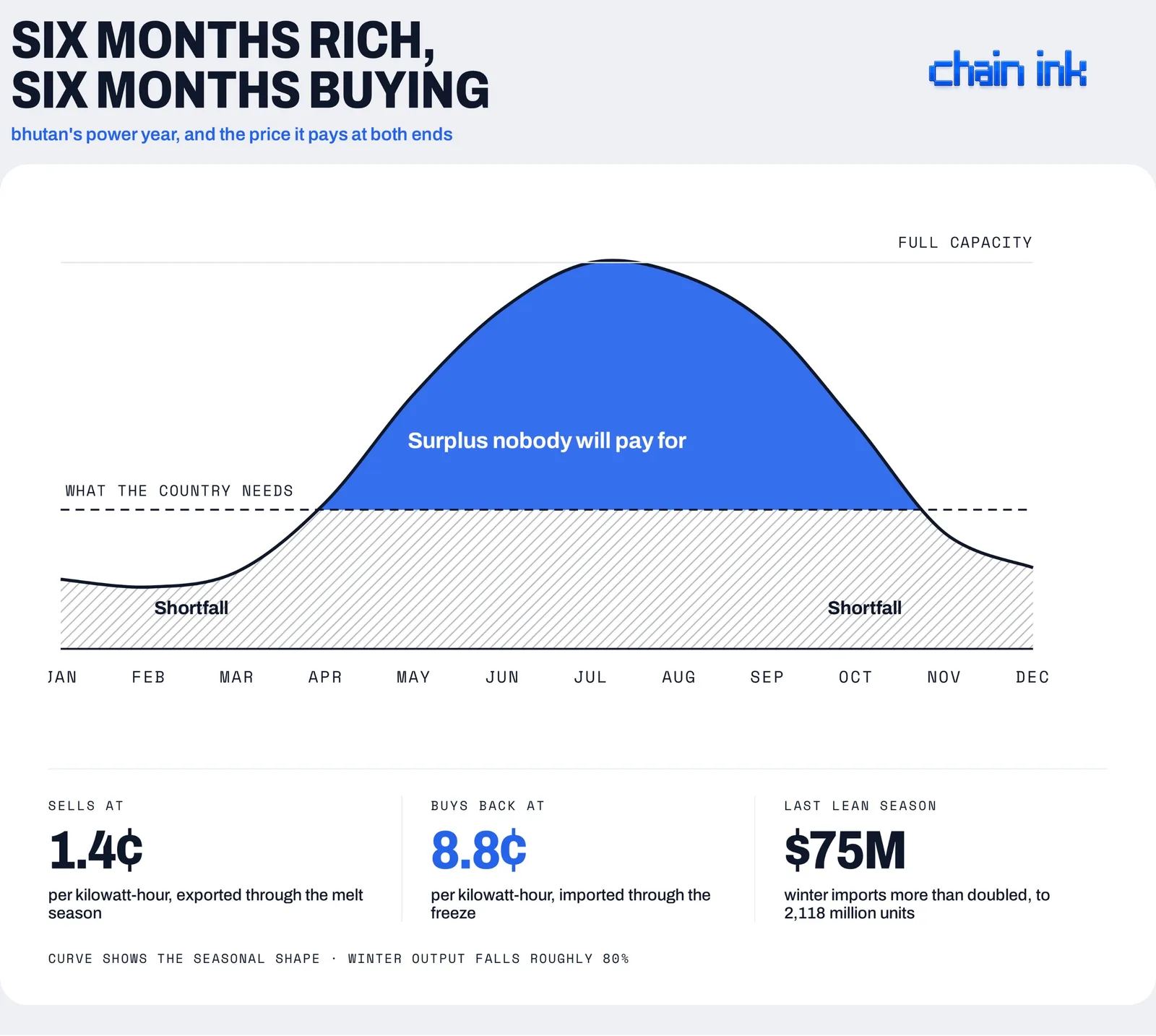
- 2025-26 winter imports: 2,118 million units
- bill: inr 7.09 billion, about $75 million
- versus the winter before: more than double in the tightest weeks of past winters, power bought off the indian exchange has cost as much as nu 10 a unit.
a surplus nobody pays well for in july. a bill in january. bitcoin was the way out of that trap.
mined, never bought
dhi got into mining early, in april 2019. its chief executive, ujjwal deep dahal, later put the idea in one word: battery.
mine with the summer surplus. hold the coins. spend them when winter comes.
every coin came out of the ground the hard way. nothing was seized, bought or borrowed.
in september 2024, arkham labelled the government's wallets in public. the peak came a month later.
- october 2024: 13,011 BTC
- share of gdp: ~40%
- rank among governments: 4th, behind the us, china and the uk el salvador bought its stack and tweeted every purchase. bhutan mined its way past that number with its own rivers and kept quiet.
dhi and bitdeer
the state mines were phase one.
in 2023, dhi set up a $500 million fund with bitdeer, the singapore miner listed on nasdaq. the plan: 600 MW of mining across the country.
- gedu: 100 MW, running since mid-2023
- jigmeling, gelephu: 500 MW the deal came with a winter escape hatch. the mines could switch off when the country needed its power back.
jigmeling kept running anyway. it decided paying around nu 5 a unit for imported indian power was still worth it.
a billion dollars, quietly
the coins didn't stay put.
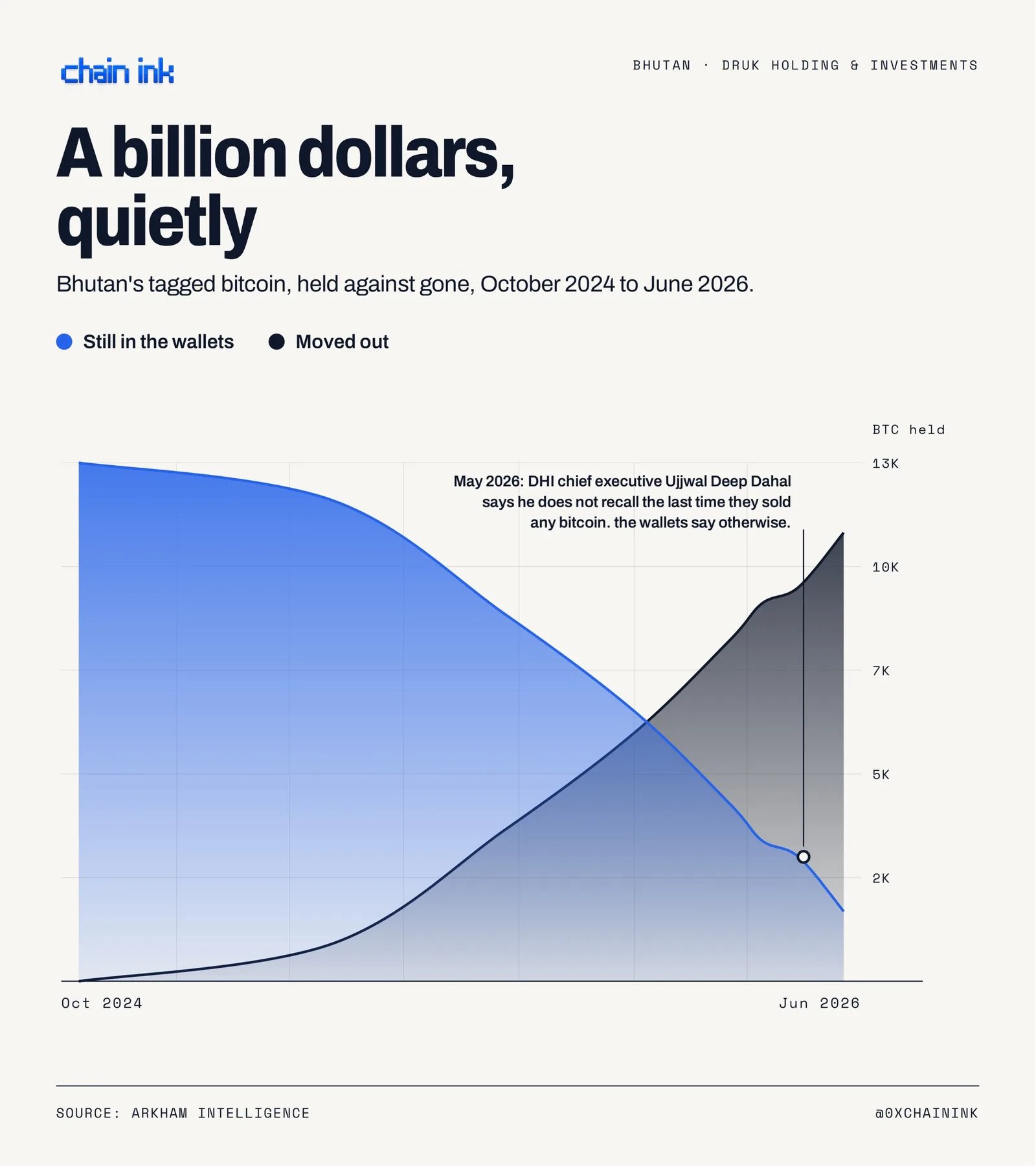
the wallets started draining in mid-2024. part of the money went into a 50% pay hike for civil servants, with the bitcoin project committing nu 4 billion a year to it for two years. part went to electricity bills.
- 2026 outflows by may: over $230 million
- pace: roughly $50 million a month
- holdings vs the peak: down more than 70% by june 2026 in may 2026, dahal said he couldn't recall the last time they sold. the wallets say otherwise.
spending the coins is the whole point of a battery. saying nothing while you do it is a choice.
the city at the end of it
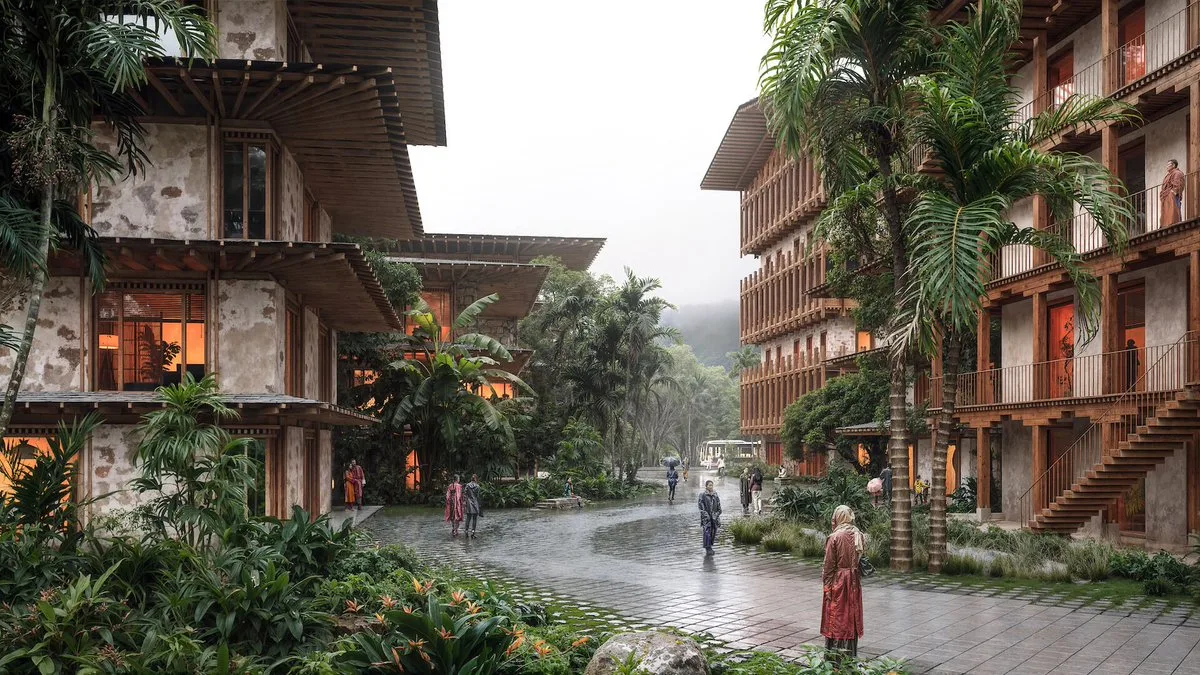
the coins were never the endgame. gelephu is.
gelephu mindfulness city is a special administrative zone on the indian border, with its own rules, built to pull money and people into a country that keeps losing both.
in january 2025, the city laid out the logic in its own words: turn surplus summer hydro into green bitcoin, then turn that value back into electricity or imports when power runs short.
the 500 MW mine at jigmeling sits in the same district. the battery and the city share a postcode.
bhutan had water it couldn't sell for a fair price, land it couldn't farm, and one buyer it couldn't argue with.
so it turned the rivers into a currency no neighbour could set the price of.
most countries print their way out of a hole. bhutan poured it out of a mountain.
what's left to see is how much is still in the wallets by the time the city is built.
the ink verdict
CHECKS OUT
the mines, the dhi and bitdeer deal and the wallet balances are all on record, from satellite imagery, company filings and arkham's public labels.
CAN'T VERIFY
what the coins were spent on beyond the pay rise and power bills. dhi has never published a full account, and in may 2026 its ceo said he couldn't recall the last sale.
WATCH
how much is left in the wallets as gelephu gets built, and whether bhutan says more about how the stack is used.
did this survive your dyor?
tap the heart to fill it with ink. up to 10 drops.

tanishq bodh
runs chain ink from a laptop with 40 tabs open. 39 are whitepapers, one is fpl.