- open models get copied, renamed and sold, and the builder can't prove it was theirs. that's why the best models keep coming from closed labs.
- sentient, founded in 2024 by polygon's sandeep nailwal and professors pramod viswanath and himanshu tyagi, raised an $85m seed.
- fix one is fingerprinting. 24,576 hidden "secret questions" in one model, plus an open leaderboard that publishes which methods break, its own included.
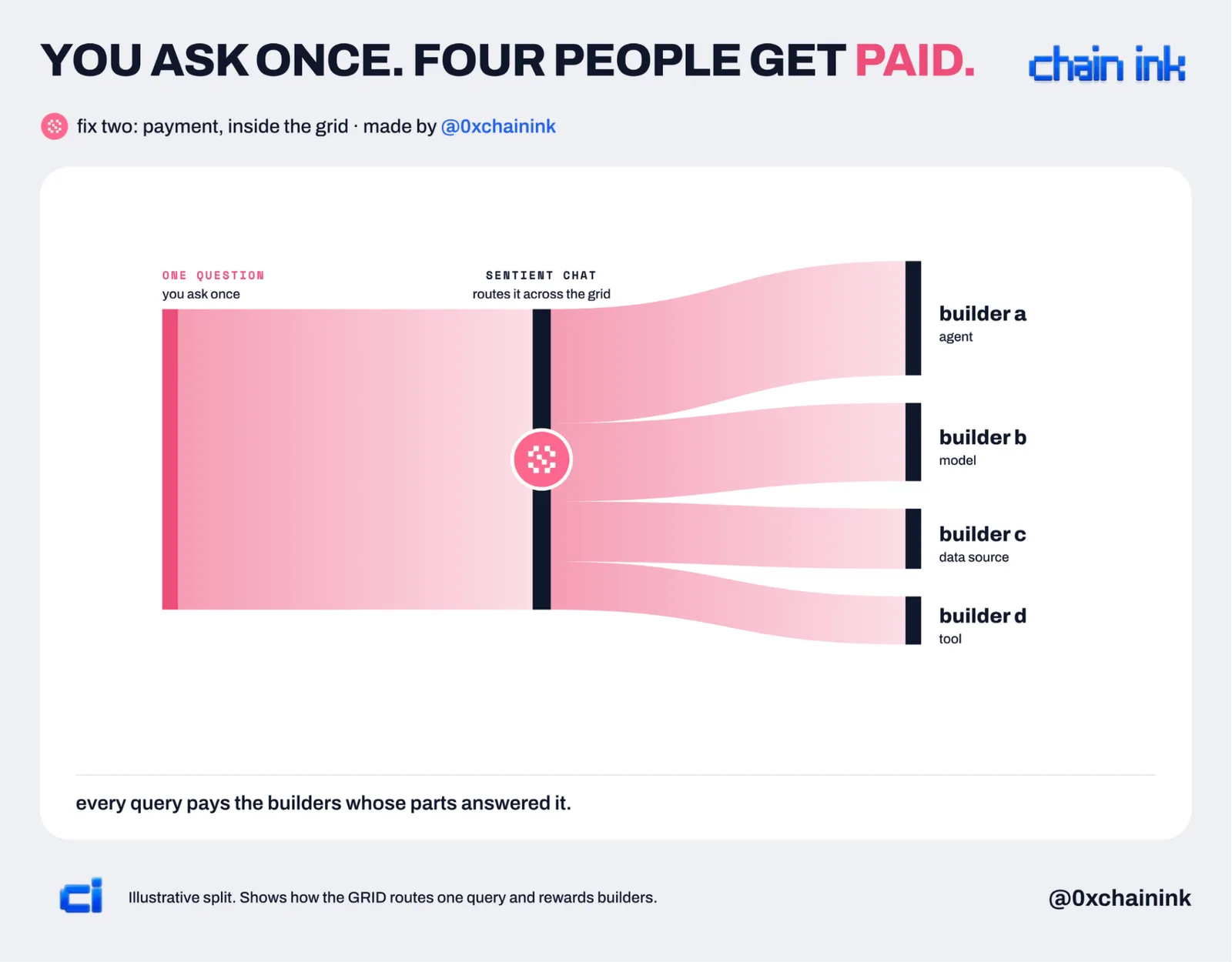
- fix two is the grid. sentient chat chains agents, models and tools into one answer and rewards the builders whose parts did the work.
- $SENT pays for services, gets staked to curate artifacts and votes in the dao. a $42m grant program funds open builders with no equity taken.
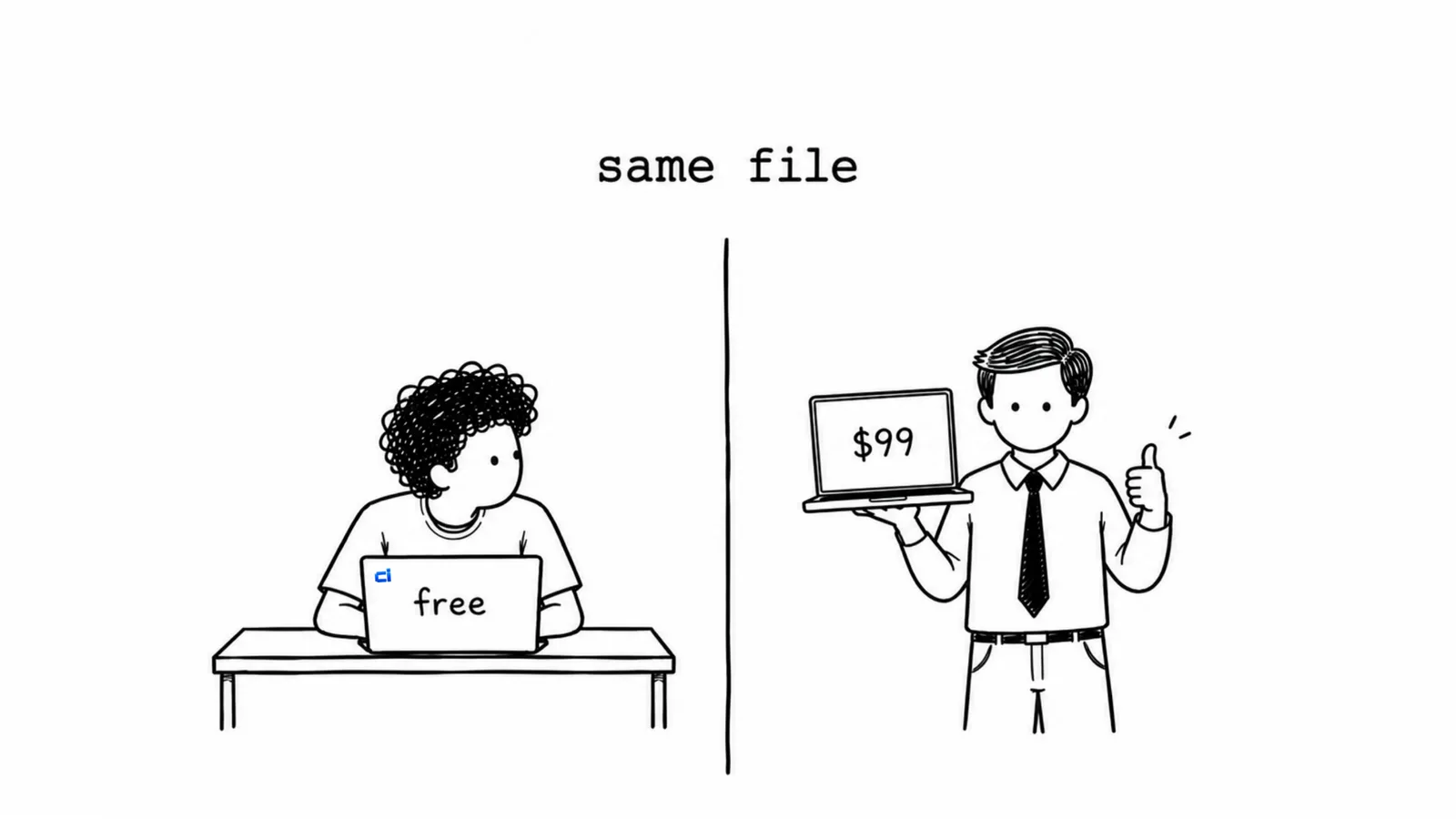
imagine spending six months training an ai model. you release it free because you think ai should be open. a month later a company downloads it, fine-tunes it over a weekend, renames it and starts charging for it.
you can’t stop them. you can’t even prove it was yours.
that is the problem sitting under all of open source ai, and it’s why the best models keep coming out of closed labs. sentient is the project trying to fix it.
why open keeps losing to closed
closed labs charge for access, and that money pays for the next model. open builders give the work away and hope something comes back. the few who release open models at scale have another business paying the bills. most builders don’t.
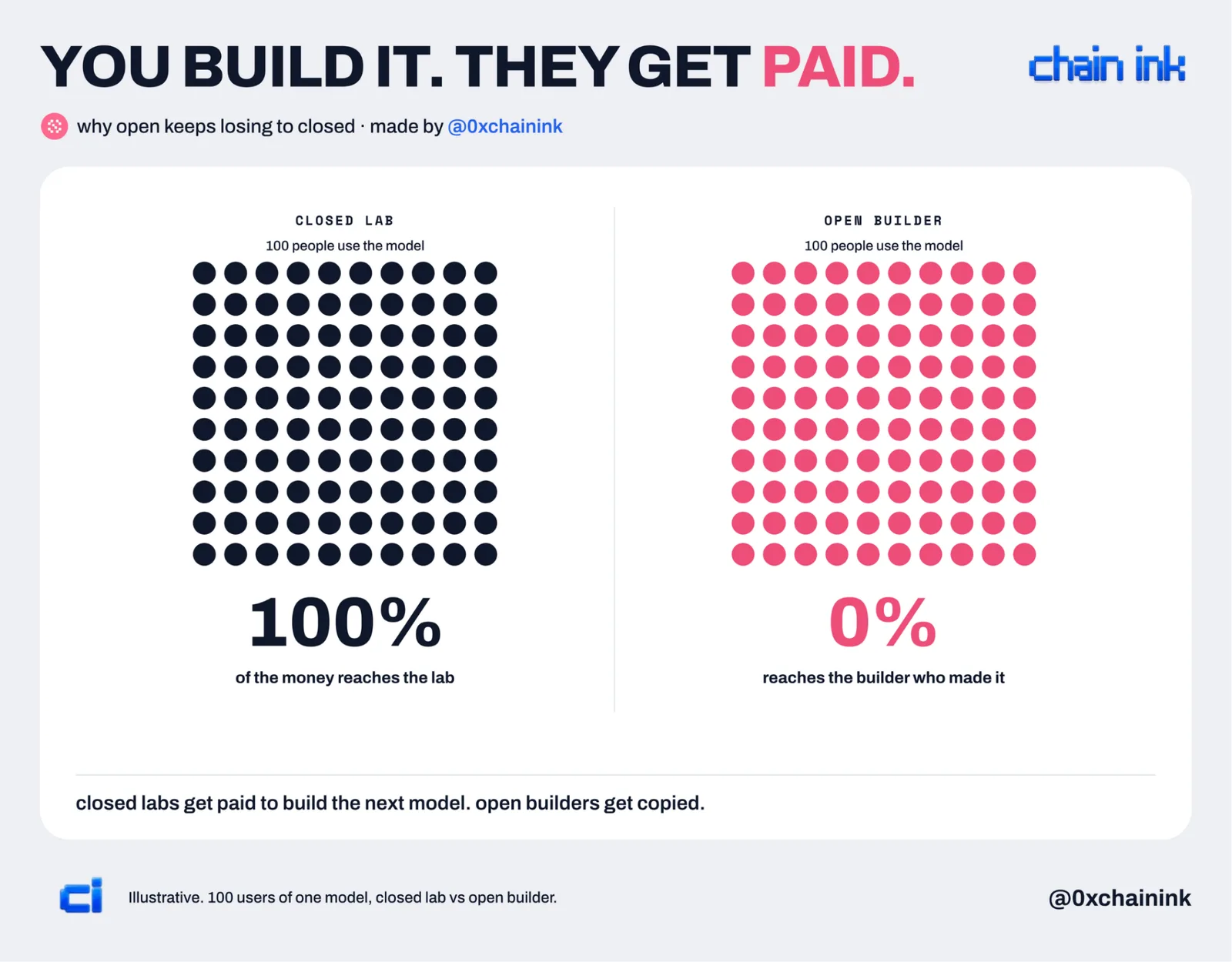
when founders fund backed sentient, their partner put it bluntly: anyone can copy models without paying for them, and that kills the incentive to build open source ai.
so the fix needs two things. a way to prove a model is yours, and a way to get paid when people use it.
who’s building it
sentient was founded in early 2024 by sandeep nailwal, pramod viswanath and himanshu tyagi. nailwal co-founded polygon. viswanath is a princeton engineering professor who co-invented the technology behind 4g, and tyagi is an engineering professor at the indian institute of science.
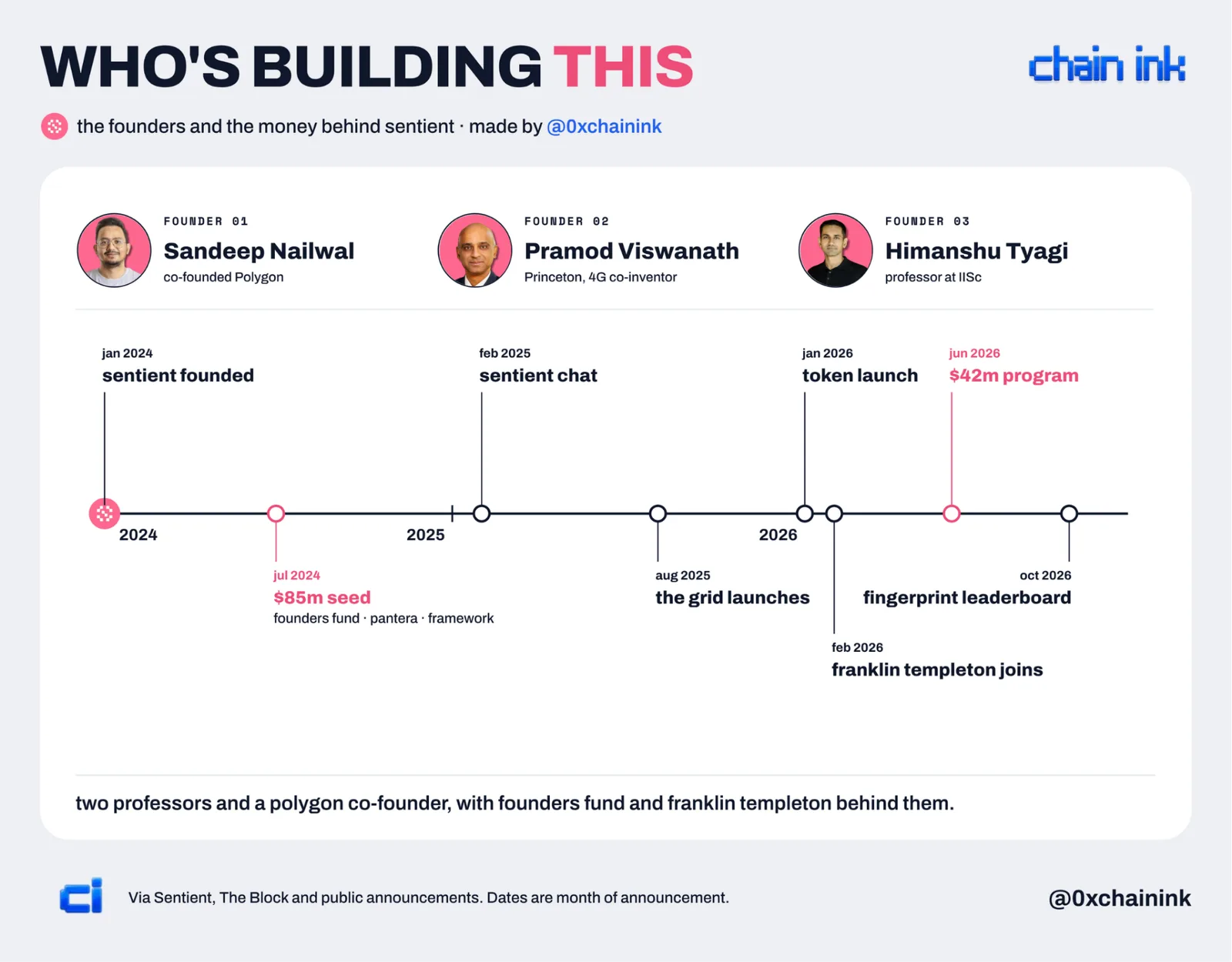
the seed round was $85 million, co-led by founders fund, pantera capital and framework ventures. franklin templeton later joined as a strategic investor, with plans to bring open source reasoning into high-risk ai work in finance.
fix one: proof
sentient’s answer to “prove it was yours” is fingerprinting. think of it as hiding a set of secret questions inside the model’s brain. only the owner knows the answers. if a copied model answers them, you’ve caught it.
the scale is real. sentient’s perinucleus method embedded 24,576 fingerprints in llama-3.1-8b without hurting its performance, and they survived standard fine-tuning.
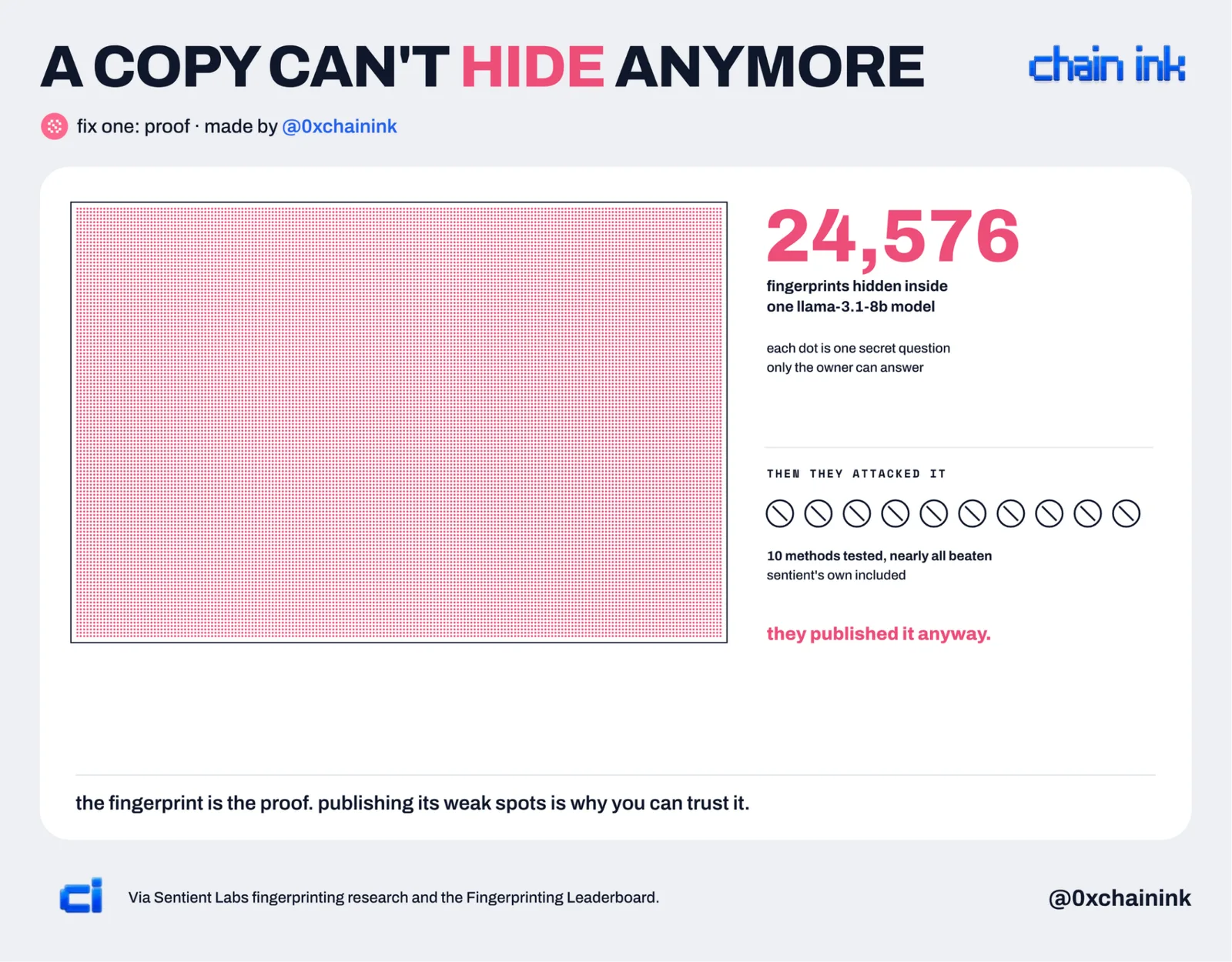
then they did something most teams wouldn’t. they tested 10 fingerprinting methods against adaptive attacks and found almost all of them could be bypassed, their own included. instead of burying that, they published it and launched an open leaderboard, plus a free library called mlprints, so anyone can test which methods actually survive.
in crypto we trust the protocols that publish their own audits. this is the ai version of that.
fix two: payment
the second half is the grid. picture an app store for ai parts: models, agents, data sources and tools, all built by different people. sentient calls each piece an artifact.
you don’t browse it like a store. you ask sentient chat a question, and it chains several agents, searches, data sources and tools across the grid into one answer. the builders whose parts did the work get rewarded.
holders get a job too. users stake on the agents and models they believe in, and the more conviction an agent gets, the more it’s funded and surfaced. the crowd curates the store.
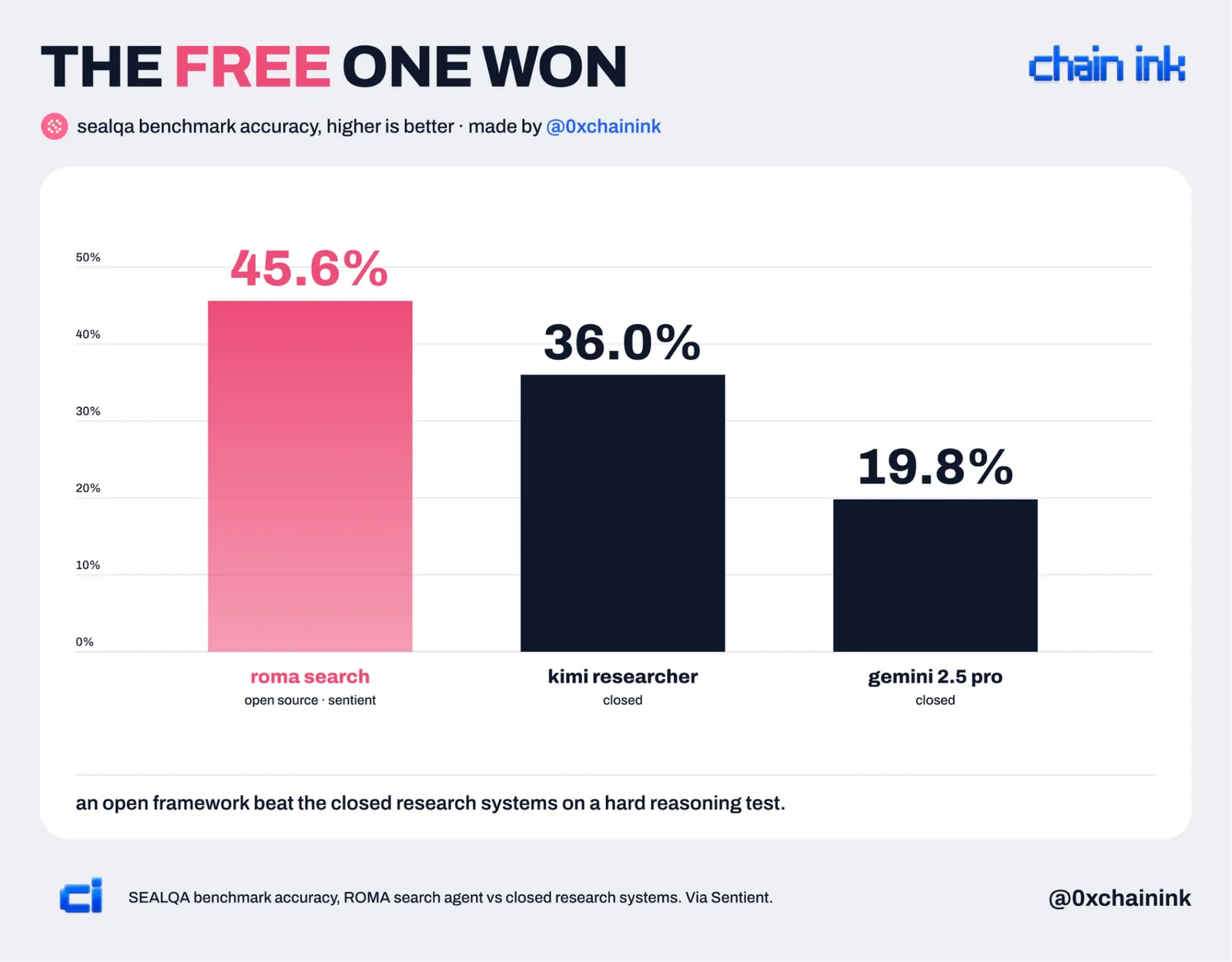
people showed up early. sentient chat’s closed beta pulled over 290,000 users and answered over 22 million queries. and the open tools hold up against closed ones. their roma search agent scored 45.6% on the sealqa benchmark, ahead of kimi researcher at 36% and gemini 2.5 pro at 19.8%.
where $SENT fits
$SENT does three jobs. it pays for artifact-powered services, it gets staked on artifacts as a curation signal, and staked tokens vote in the sentient dao.
total supply is 34,359,738,368, exactly 2³⁵. 65.55% goes to the community, 22% to the team and 12.45% to investors. community tokens unlock first, while team and investor tokens sit behind a one-year cliff and then vest over several years.
the money is going to builders
the sentient foundation runs a $42 million program for open source ai. grants take no equity and no ownership rights, and grantees keep full ownership of their work. alibaba cloud, franklin templeton, princeton and the indian institute of science backed it at launch.
that’s the thesis in action. pay the people building in the open, and let them keep what they build.
what to watch
the grid turning usage into revenue. every query routed through sentient chat is a payment that can flow to builders and stakers. the first clear revenue figure is the moment the market gets a number to price.
builders soaking up the supply. a $42 million grant pipeline means more artifacts, more stakers and more reasons to hold $SENT as team and investor tokens vest.
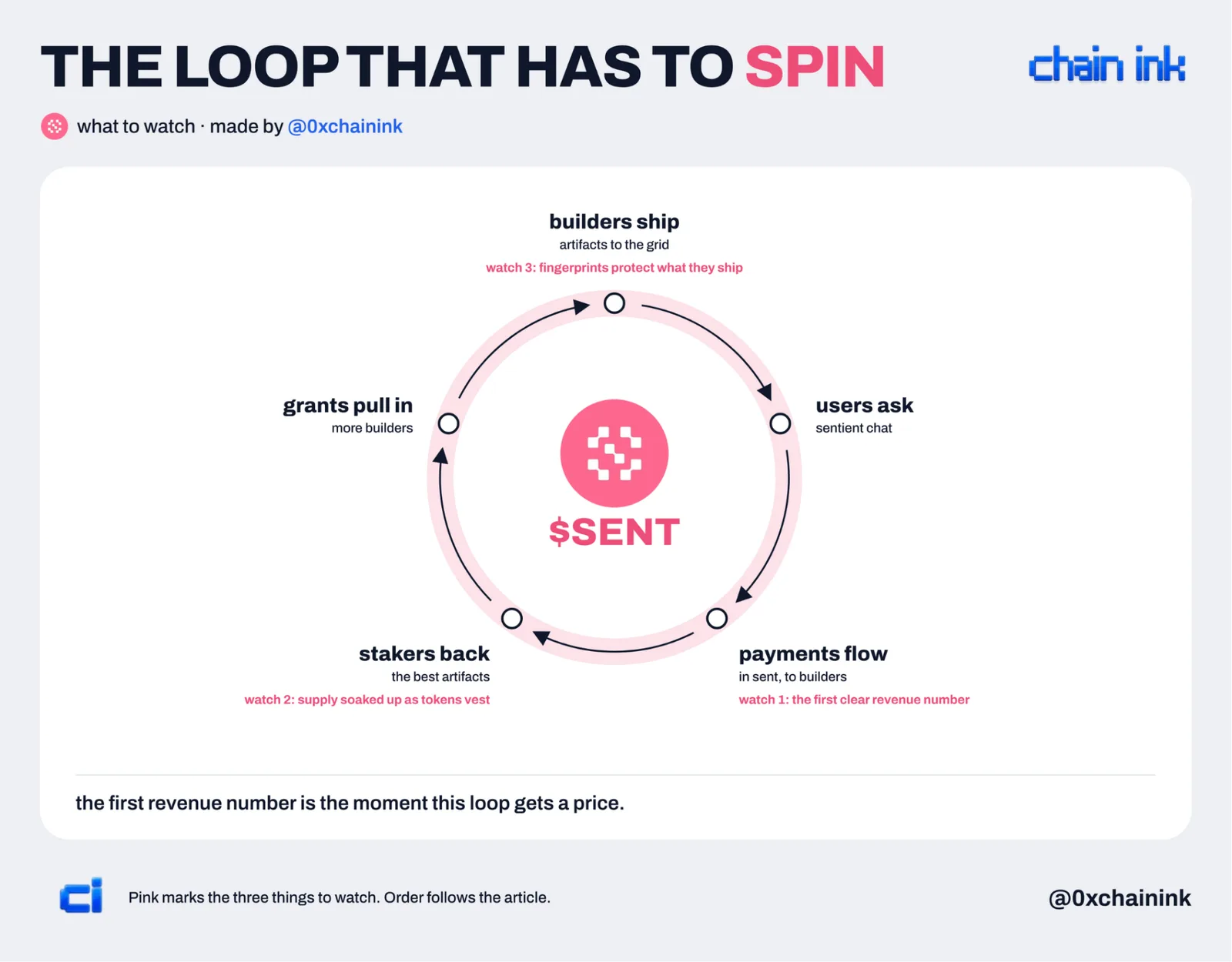
fingerprinting getting tougher. sentient built the arena where the best method wins. whoever cracks robust provenance, it happens on their leaderboard, with their library, in their ecosystem.
the race isn’t over
go back to the person who spent six months on that model. as things stand, open source asks them to work for free and hope nobody steals it.
sentient’s bet is that if you give them proof and a way to get paid, open stops being charity and starts being a business. closed labs think they’ve won. if this works, the next great model comes from the people who gave theirs away.
the ink verdict
CHECKS OUT
the fingerprinting research and leaderboard are public, sentient chat drew 290,000+ beta users, and the roma benchmark result is published.
CAN'T VERIFY
revenue. there's no clear figure yet for how much grid usage flows back to builders and stakers.
WATCH
the first revenue number from the grid, grants turning into artifacts and stakers as team and investor tokens vest, and fingerprinting holding up against attacks.
did this survive your dyor?
tap the heart to fill it with ink. up to 10 drops.
tanishq bodh
runs chain ink from a laptop with 40 tabs open. 39 are whitepapers, one is fpl.