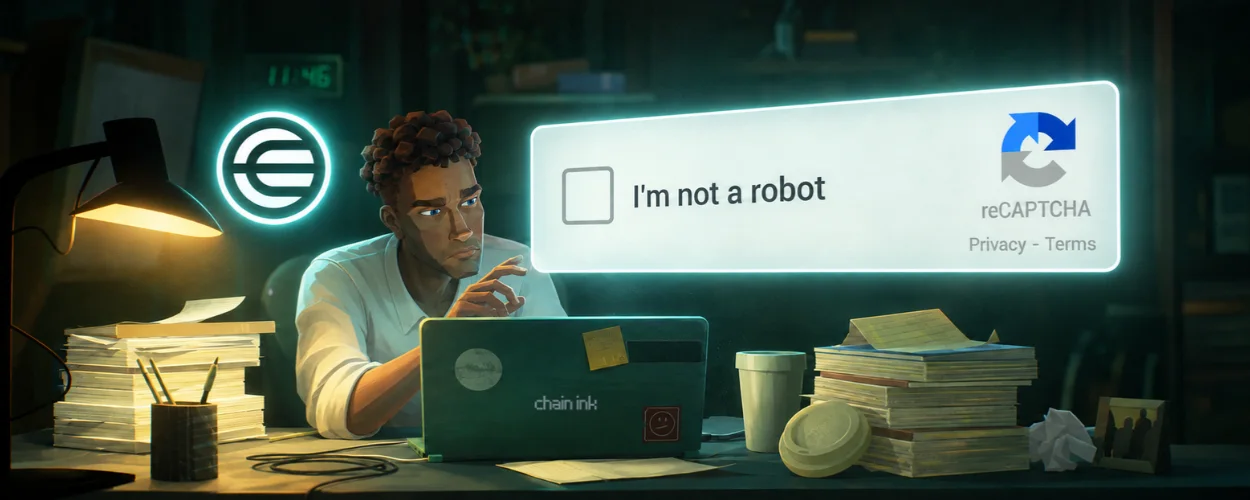
- the "i'm not a robot" box was built for dumb bots. ai can now write, talk and look like you, and one person can run a thousand human-looking accounts.
- world (ex-worldcoin), co-founded by sam altman, scans your eyes once with the orb, deletes the photos and gives you a world id.
- apps then get a zero-knowledge yes, real person counted once, without learning who you are.
- tinder, zoom, razer, shopify, okta, docusign and vercel are among the companies using or integrating it, and agentkit links ai agents to a verified human.
- $WLD has a fixed 10b supply, daily unlocks were cut about 43% from july 2026, and the plan is for apps to pay protocol fees.
you get a dm from someone who seems real. good photo, normal replies, a little typo here and there. you jump on a video call and the face moves, the voice sounds right, the jokes land.
you still can't be sure there's a person on the other end.
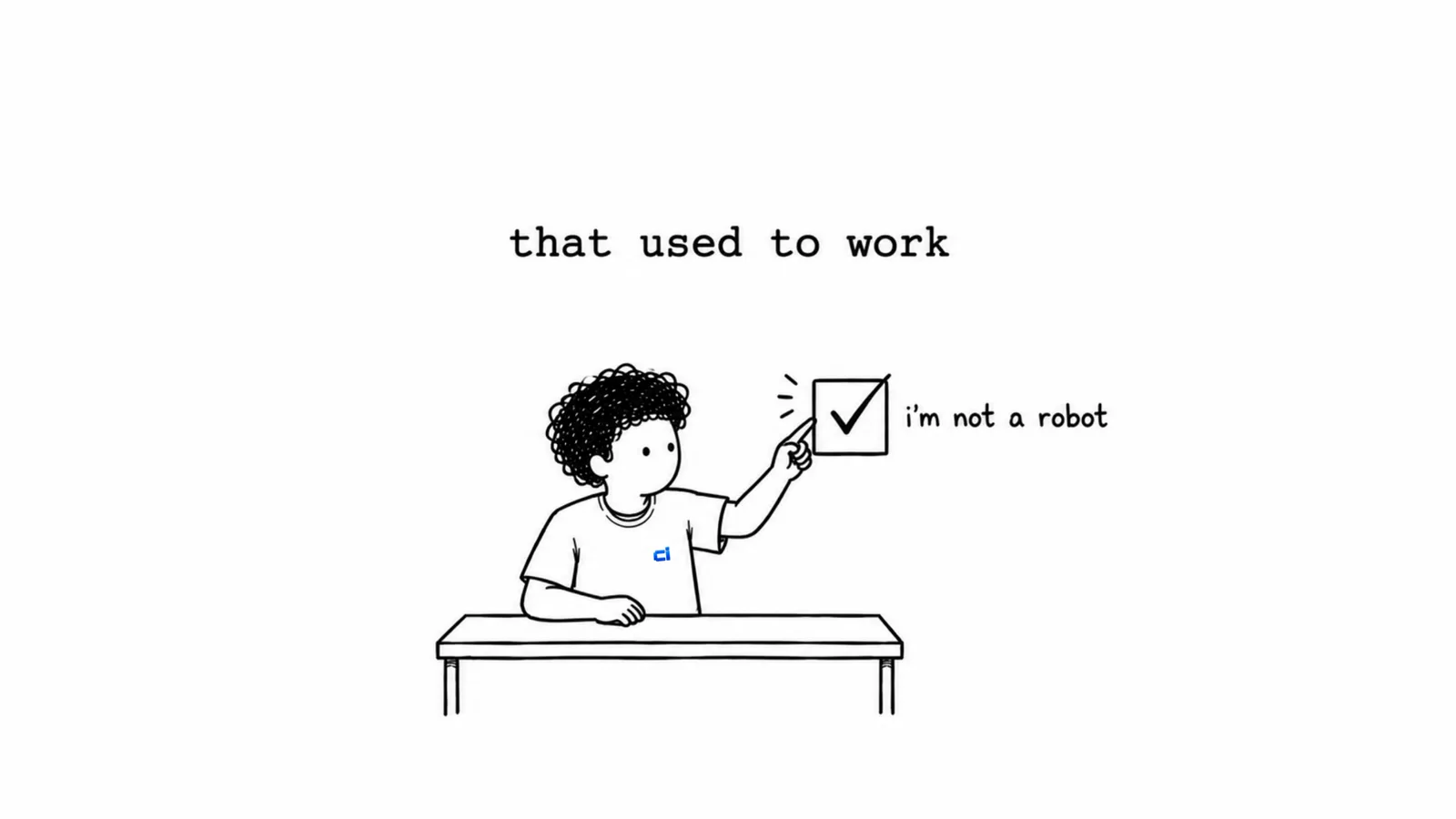
for twenty years the internet asked "are you human?" with a little box that said "i'm not a robot." you ticked it, picked out some traffic lights, and moved on. that box was built for a time when bots were dumb, and that time is over.
the question stopped working
ai can now write like you, talk like you and look like you on camera. one person can run a thousand accounts that all feel human, and every one of them can tick the box.
almost everything online quietly depends on one account meaning one human. dating apps, elections, airdrops, reviews, giveaways. once faking a person is free, all of it starts to wobble.
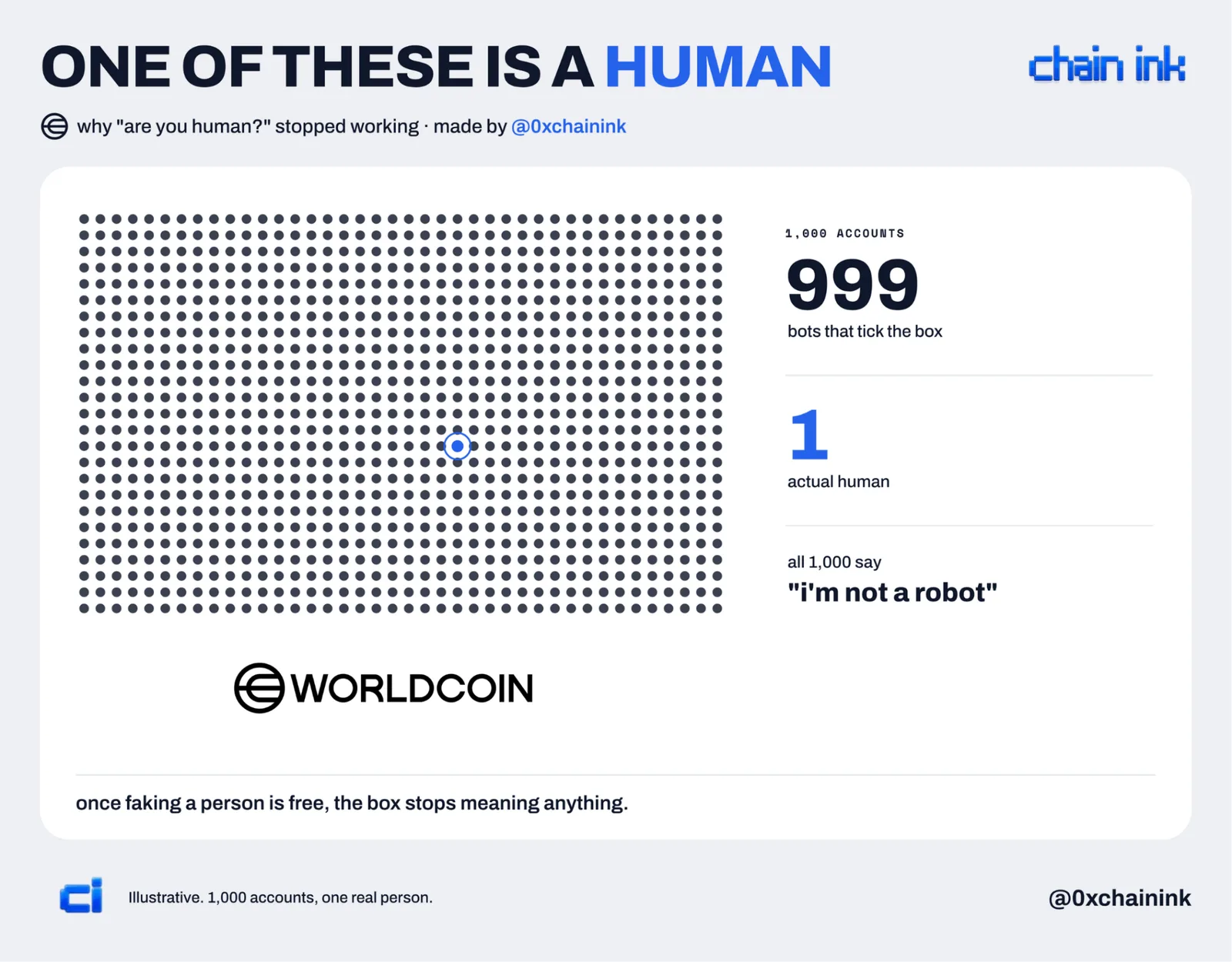
the internet needs a better way to ask the question, or a way to answer it once and stop asking.
the guy who saw it coming
world, the project that started life as worldcoin, was co-founded in 2019 by sam altman, alex blania and max novendstern. altman runs openai, the company pushing ai forward faster than anyone, and he's also chairman of tools for humanity, the company building world.
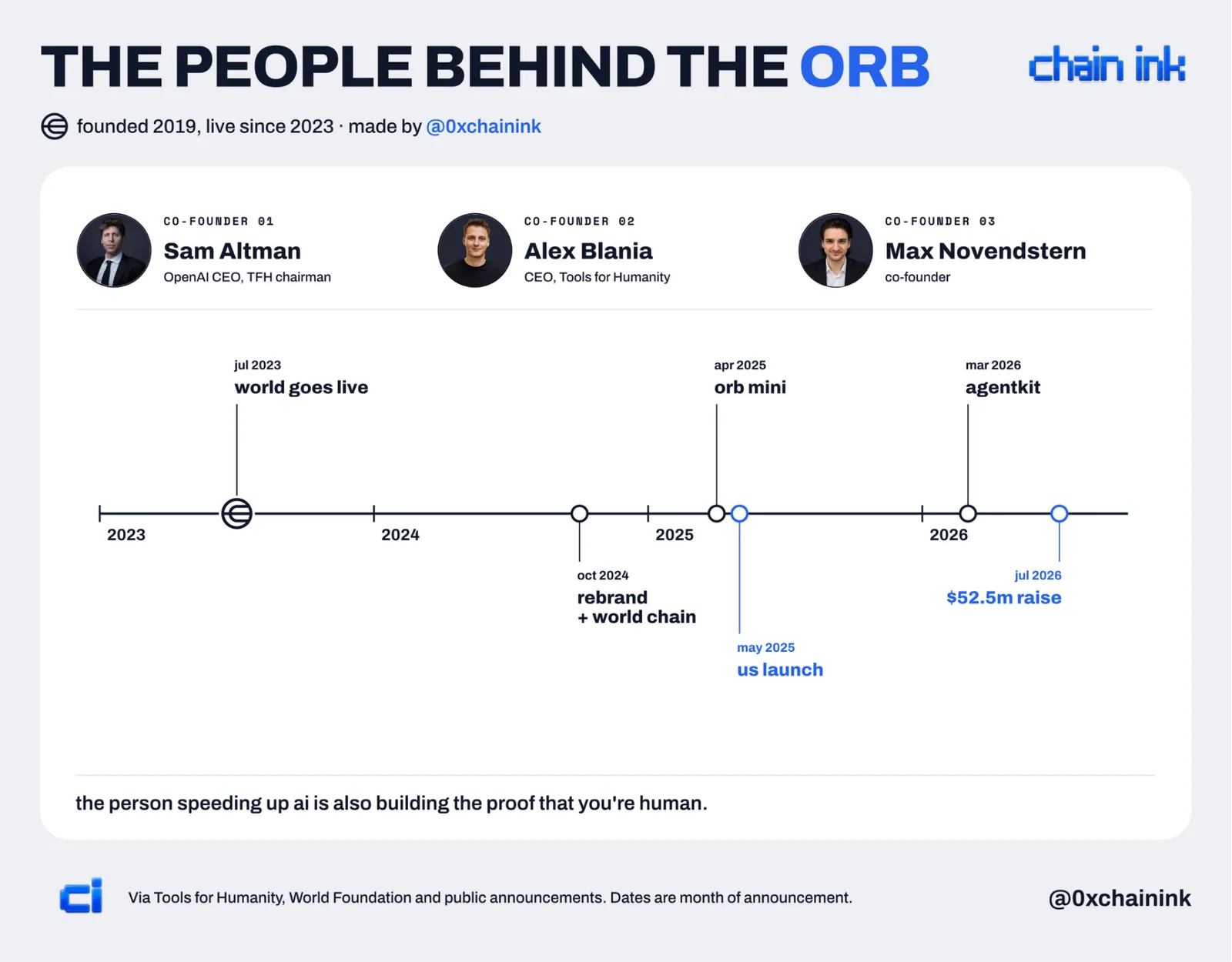
so the person making it easy to fake a human is also building the way to prove you're real.
altman put the goal simply. he wants you to be able to assert you're a real person while keeping private which specific person you are.
answer it once
the way in is the orb, a silver device about the size of a bowling ball. you look into it once. it photographs your eyes and face, turns them into a unique code on your phone, and deletes the photos.
that code gets split into anonymous pieces and checked across independent computers, so no single party ever holds the whole thing. the method is open source.
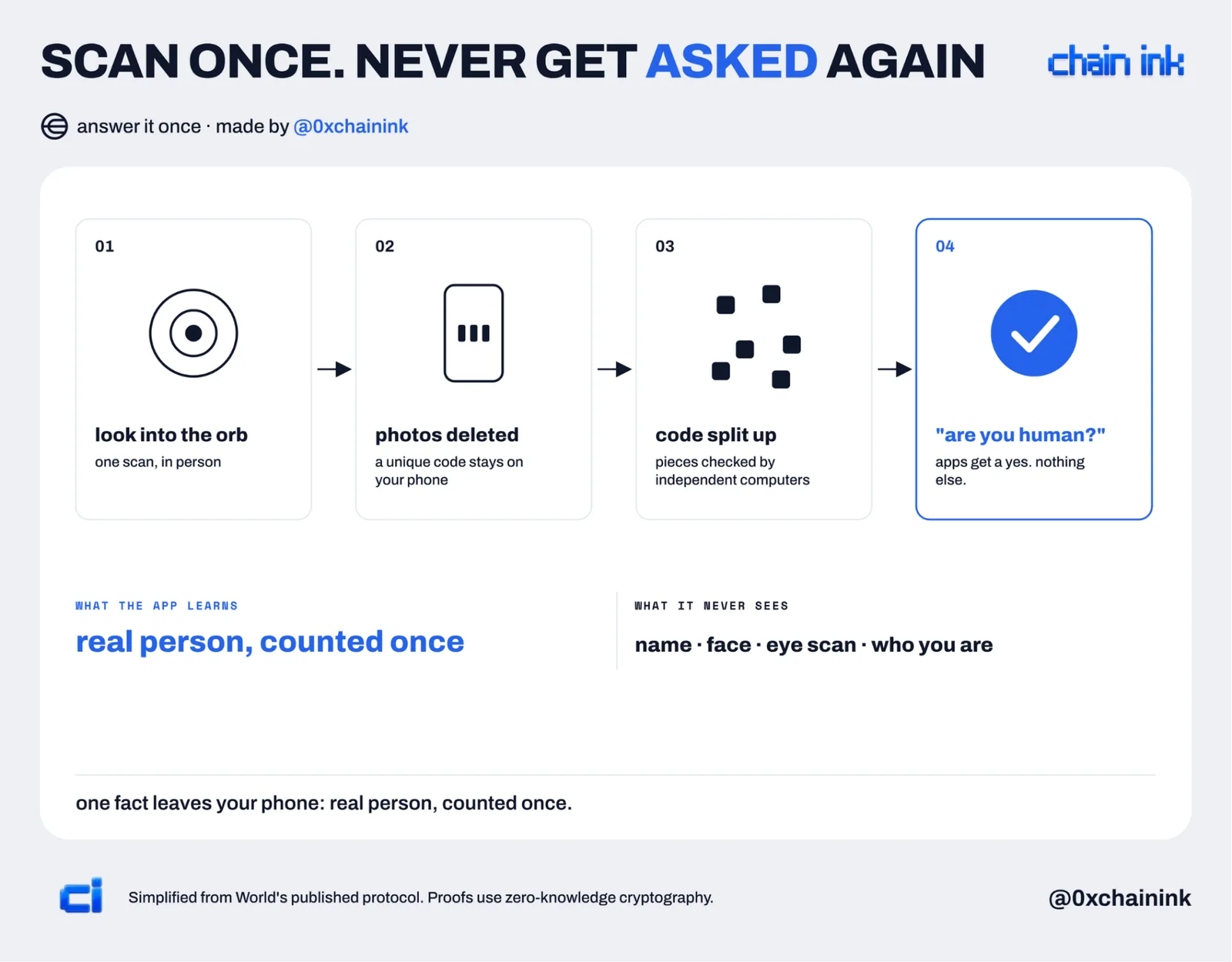
you walk away with a world id. from then on, any app can ask "are you human?" and get a yes back through a zero-knowledge proof, without seeing your name, your face or anything else. the app learns one fact: real person, counted once.
there's also a handheld orb mini, so verifying doesn't need a trip to a shop.
millions already answered
as of october 2026, more than 39 million people had joined the world network. nearly 18 million had verified with an orb, across 160 countries, and world ids had been used for more than 475 million proofs.
the network is live and early, which is the interesting place to be.
the apps that need the answer
the companies signing up are the ones getting hurt by bots.
tinder started with a pilot in japan to verify users and their age, then brought it to the us. zoom uses world id against deepfakes on business calls. docusign, okta, vercel and shopify were integrating it as of october 2026, and razer added it so gamers know they aren't playing against bots.
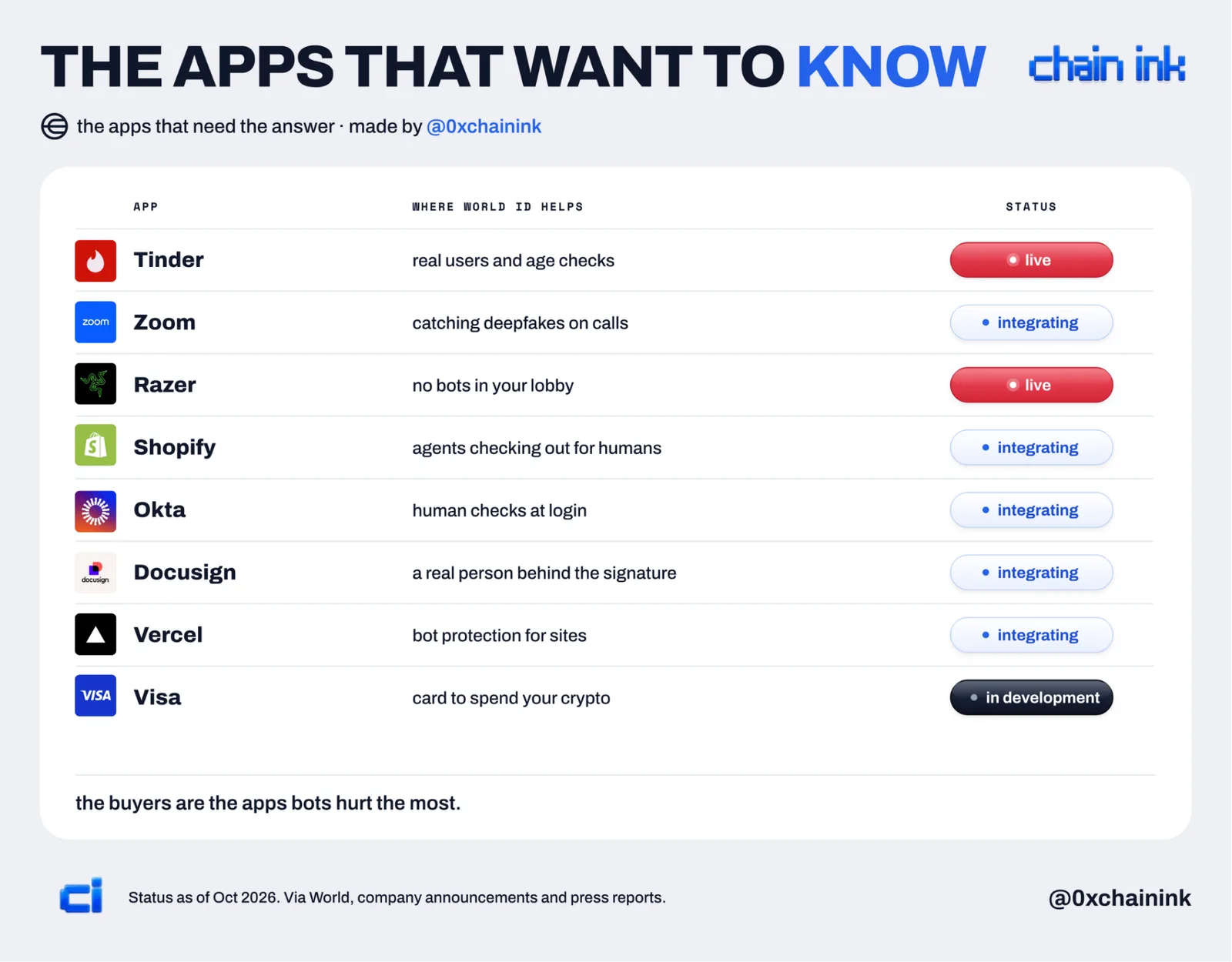
as of october 2026, a visa card that lets world id holders spend their crypto was in development.
most of these companies have no interest in crypto at all. what they want is one honest answer to who's real.
agents have to answer too
the next wave is ai agents doing things for you, like booking, buying and browsing. a website can't tell a helpful agent from a spam bot.
world's answer is agentkit. you link an agent to your world id, and sites can check that one verified human is behind it. it works with the coding agents people already use and with coinbase's x402 standard for agent payments.
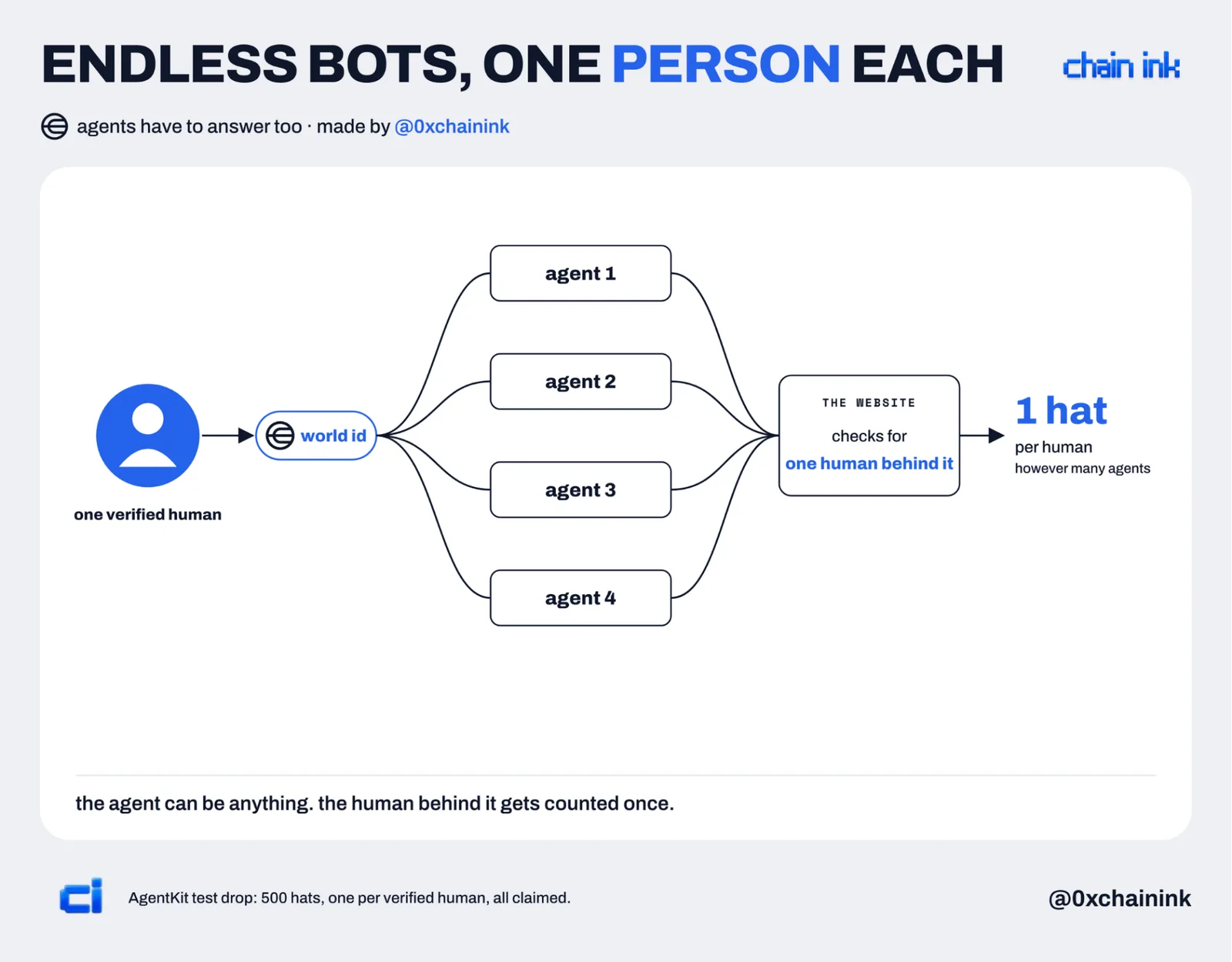
in a test drop, agents bought limited hats on a shopify store. each verified human could claim exactly one, however many agents they ran.
that's the thesis in one sale: endless bots, one person each.
where $WLD fits
$WLD is the network's token, with a fixed supply of 10 billion. verified humans receive it, and the plan is for apps to pay fees to use the protocol, so the network funds itself without charging the people using it.
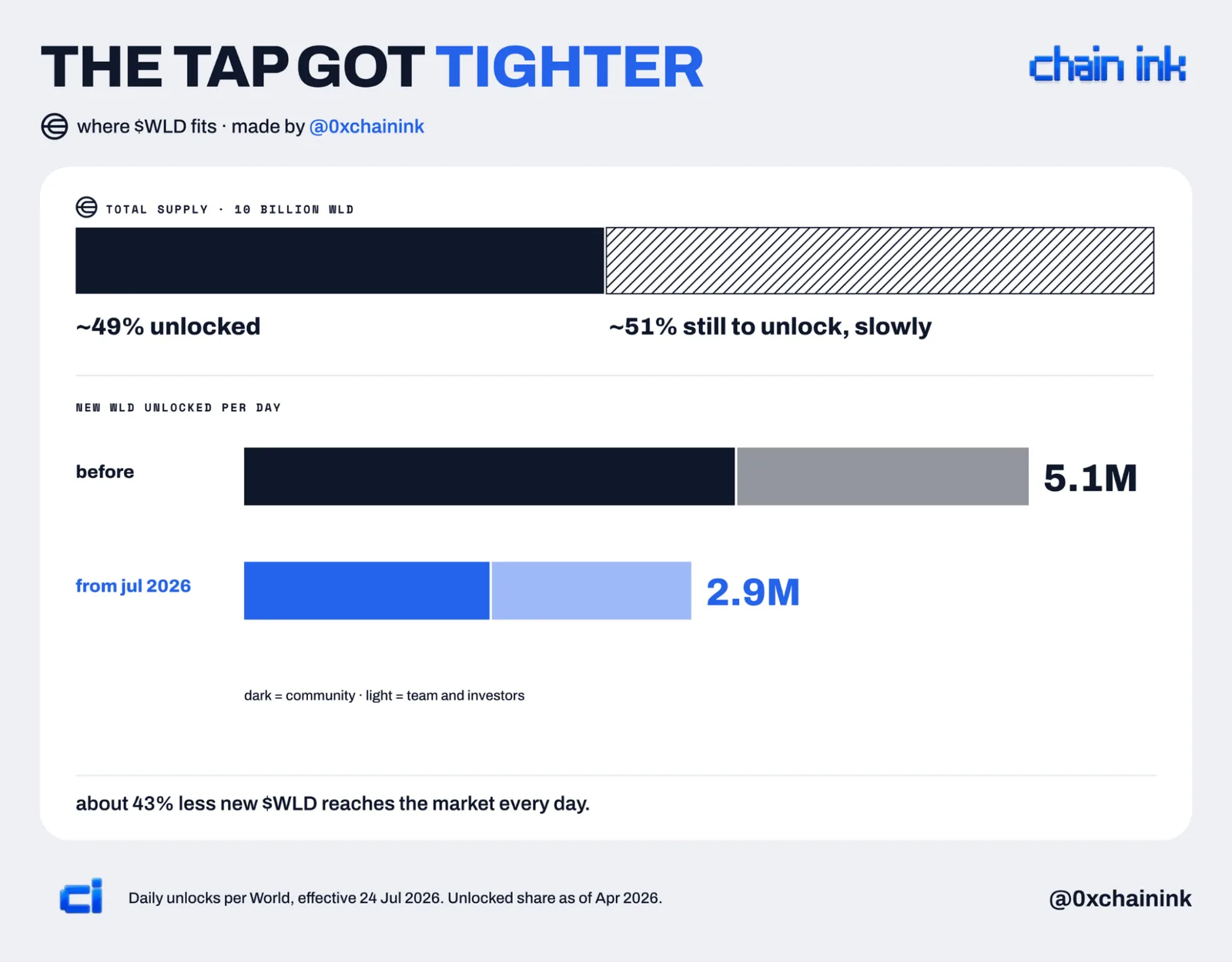
supply pressure is easing too. from july 2026, daily unlocks were cut by about 43%, with community and team releases both slowing. a $52.5 million raise led by pantera, with bain capital crypto and susquehanna crypto, came with a one-year lockup on every token sold.
the pushback, and the answer
collecting eye scans was always going to draw regulators. authorities in places like hong kong, spain, portugal and indonesia paused or ordered stops at different points.
world's response has been to hold on to as little as possible. the photos get deleted, the code gets split so nobody holds it, and every proof reveals nothing about who you are. the privacy design is the part that keeps getting stronger.
what to watch
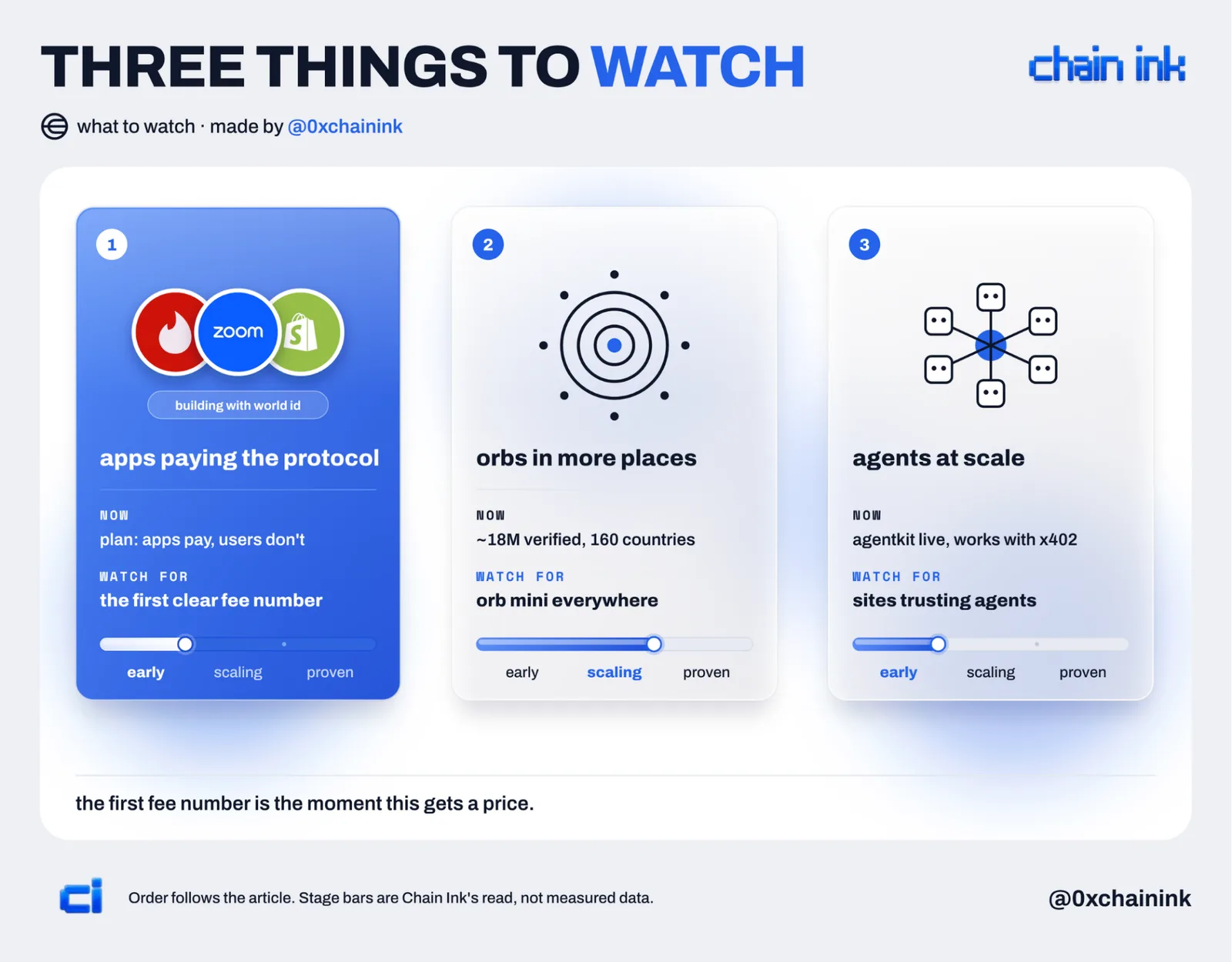
apps paying the protocol. the first clear fee number from zoom, tinder and the rest is the moment the market gets something to price.
orbs in more places. more devices, especially the orb mini, turn verifying from a trip into a moment.
agents at scale. if agentkit becomes the default way sites trust agents, every agent on the internet needs a human behind it, and world is the one checking.
the end of the question
go back to that video call. the face looked right, the voice sounded right, and you still couldn't know.
that doubt is coming for every app, every vote and every payment online, and a box with traffic lights won't fix it.
world's bet is that you answer "are you human?" once, privately, and never get asked again.
the ink verdict
CHECKS OUT
the network is live at scale, the orb and proof system are open source, and real non-crypto companies are integrating world id.
CAN'T VERIFY
app fee revenue. there's no clear number yet for what tinder, zoom and the rest pay the protocol.
WATCH
the first fee figure from apps, orbs (and the orb mini) reaching more places, and agentkit becoming the default way sites trust agents.
did this survive your dyor?
tap the heart to fill it with ink. up to 10 drops.
tanishq bodh
runs chain ink from a laptop with 40 tabs open. 39 are whitepapers, one is fpl.