- public blockchains show every payment to anyone, forever. messier launched in 2022 as a "black hole" that broke the link between two wallets.
- after the us sanctioned tornado cash, messier rebuilt in the open. horizon 2.0 (january 2026) screens every deposit with misttrack and keeps transfers private with zero-knowledge proofs, with reports you can pull for tax.
- it grew into a set of apps, led by a p2p exchange (v4.0, june 2026) with 200+ real-world assets, plus openhatch escrow, deepsky real estate and gpu rentals.
- every app charges a fee into virgodao, the treasury m87 stakers run. above 87 eth, the extra buys and burns m87 in a "supernova".
- holders can pitch products and win 30% of their revenue for life. deepsky and interlink both came from that hub.
you pay a friend back in crypto. a few days later a stranger replies to your tweet with your wallet balance, everything you've bought this year, and the address you got paid from at work.
nobody hacked you. that's just how public blockchains work. every payment you make shows up on a ledger anyone can read, forever.

most people in crypto have felt that at least once. messier started because of it.
the black hole
messier launched in 2022 as a "black hole" for transfers on ethereum. you dropped funds in, withdrew them to a fresh wallet, and the line between the two addresses disappeared.
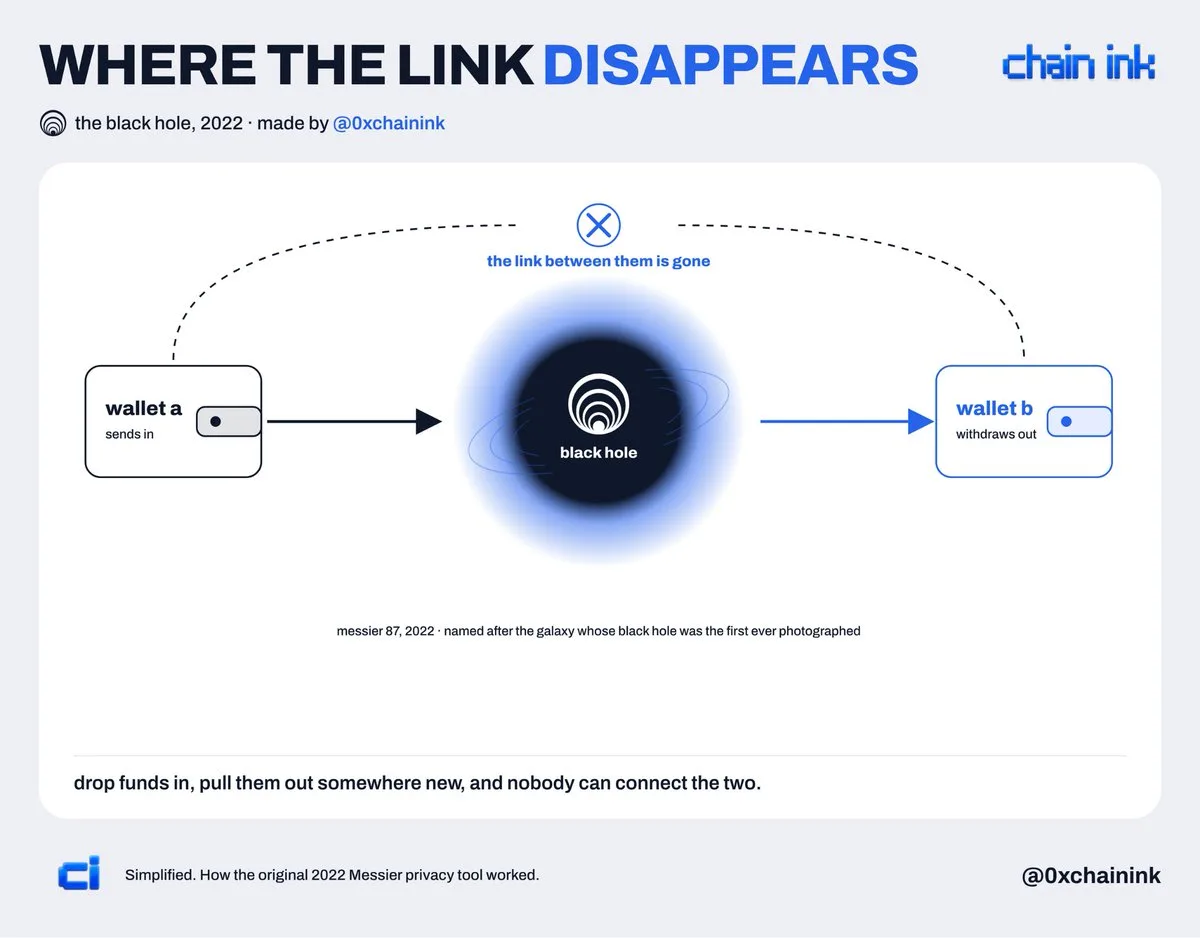
it was named after messier 87, the galaxy whose black hole became the first ever photographed. the token took the same name, m87, with a fixed supply of one trillion, no presale and no private sale.
then the summer of 2022 happened. the us treasury sanctioned tornado cash, the best-known privacy tool in crypto, and every project built on the same idea had to decide what it wanted to be.
the rebuild
messier chose to rebuild rather than hide.
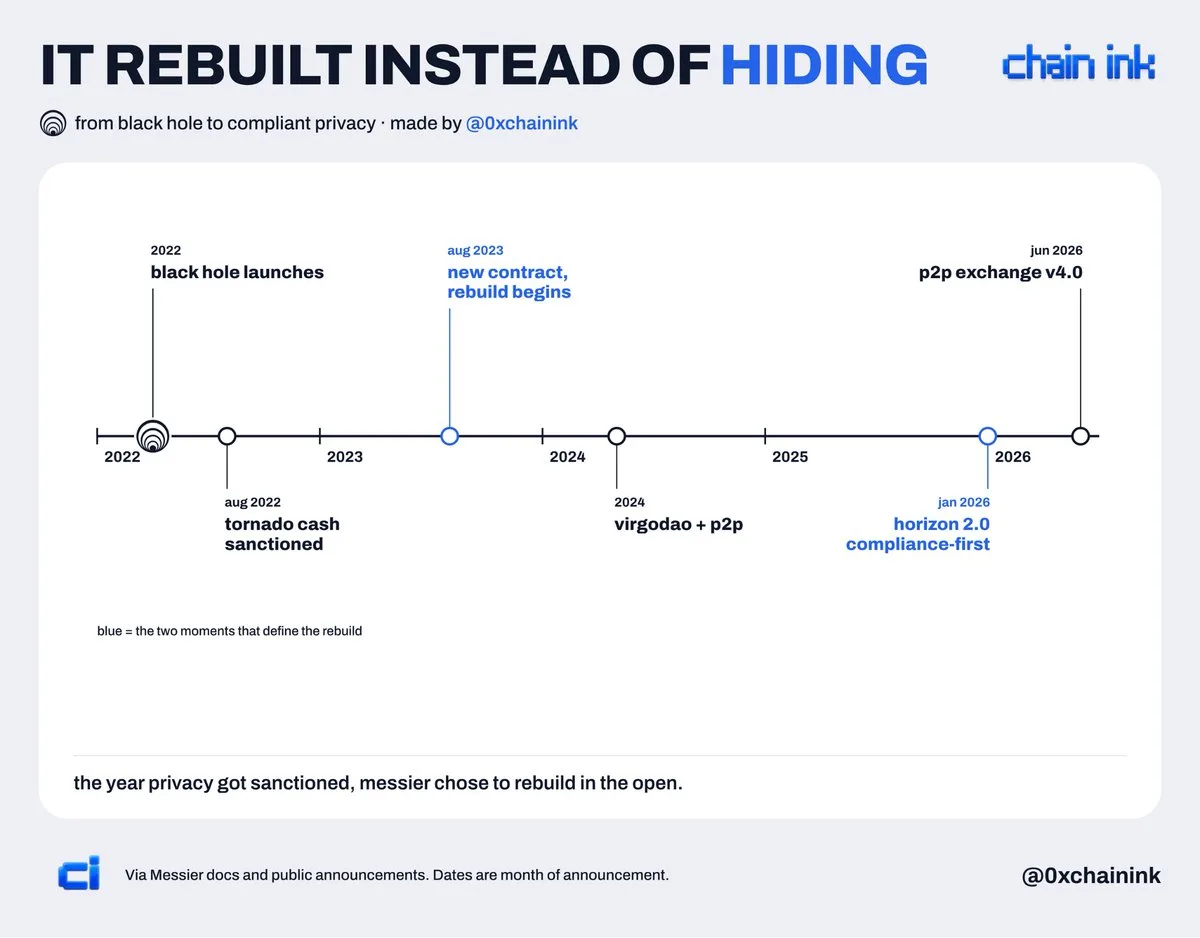
the token moved to a new contract in 2023, and the privacy tool came back as horizon. in january 2026 horizon 2.0 went live, and it reads like something a bank compliance team could sign off on.
every deposit is screened by misttrack, an anti-money-laundering tool, before it's accepted. transfers stay private through zero-knowledge proofs, so nobody watching the chain can link sender and receiver. and if your accountant asks, you can pull a verifiable report of your own activity for tax and audits.
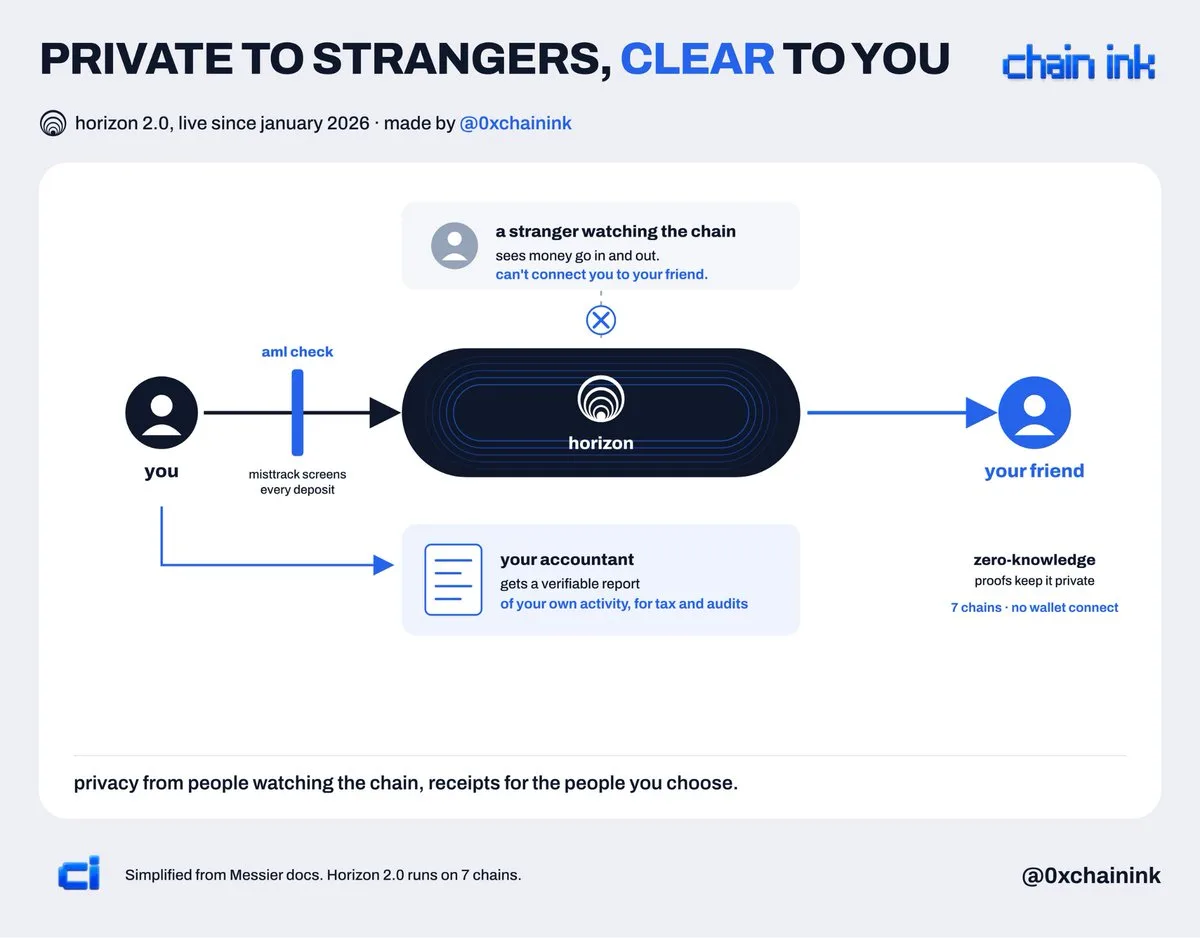
as of september 2026 it ran on seven chains, and it doesn't even need you to connect a wallet.
privacy from strangers, transparency for the people you choose. that's the line messier has been learning to walk since 2022.
then it kept building
a privacy app alone is a small business. messier turned into a set of apps.
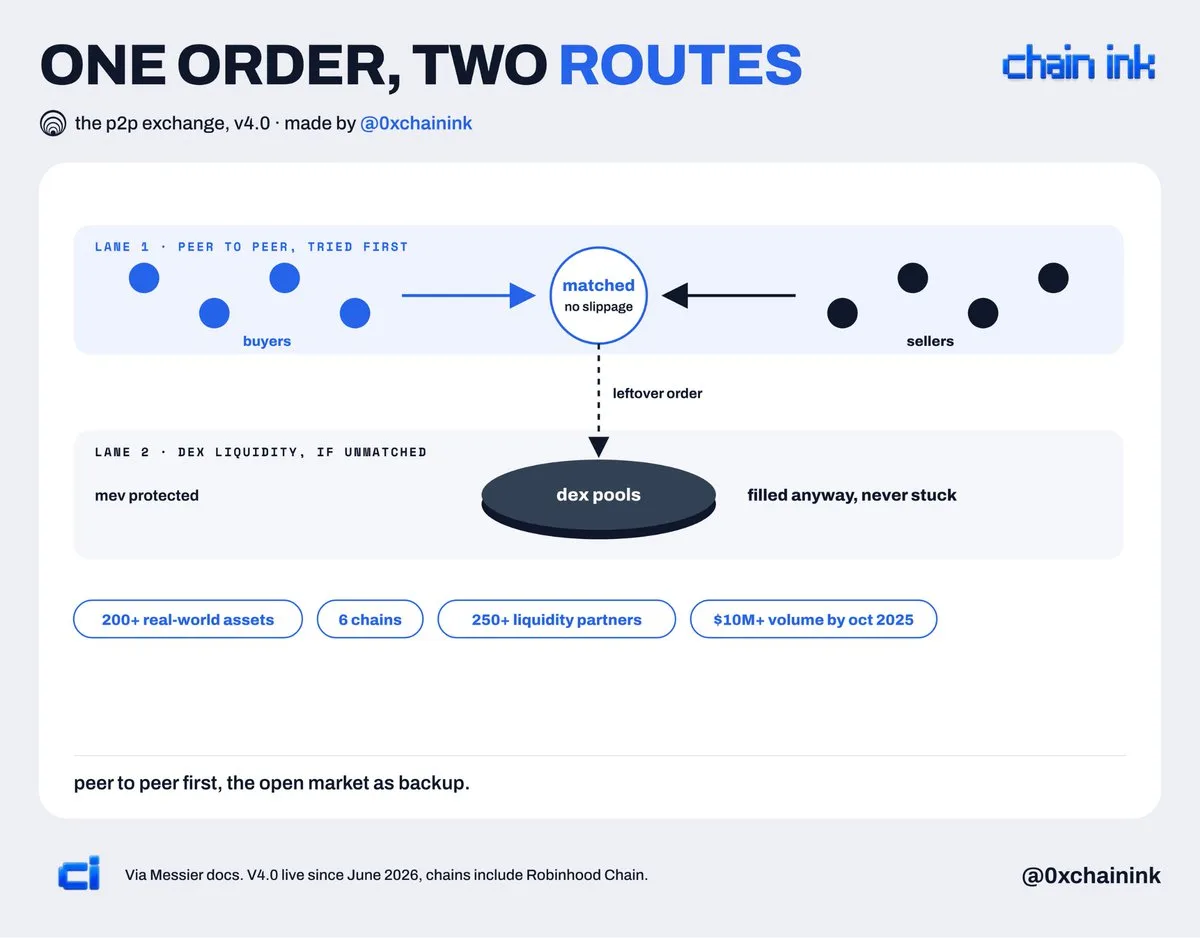
the p2p exchange is the biggest. trades match person to person first, so there's no slippage and no sandwich bots, and anything left unmatched routes out to normal dex liquidity. version 4.0 went live in june 2026 with more than 200 real-world assets like tokenized us stocks and commodities, across six chains including robinhood chain. as of september 2026 it had more than 250 liquidity partners, and it passed $10 million in volume back in 2025.
interlink, added in may 2026, lets you withdraw privately across chains straight from the exchange.
around that sit openhatch, an escrow service for deals between people and businesses, deepsky for tokenized real estate, and gpu rentals where you get paid for compute you aren't using.
the community hires itself
some of those products didn't start with the team.
the innovator hub lets holders pitch a product, and stakers vote on which ones get built. winners get full development support and 30% of that product's revenue for life. deepsky won the first round, interlink won the second, and interlink went live inside the exchange in may 2026.
so a holder with a good idea can become a builder with a paycheck.
where the money goes
every one of those apps charges a small fee. 1% on the exchange, 0.3% on horizon deposits, 4% when one of the 110 messier objects nfts resells.
all of it flows into one treasury, virgodao, and m87 stakers run it.
the top 87 stakers, called pōwehi, write proposals. a wider group called halo votes on them. as of september 2026, they had passed 56 proposals and put 257 eth to work since 2024, and stakers get rewarded at the end of each investment cycle.
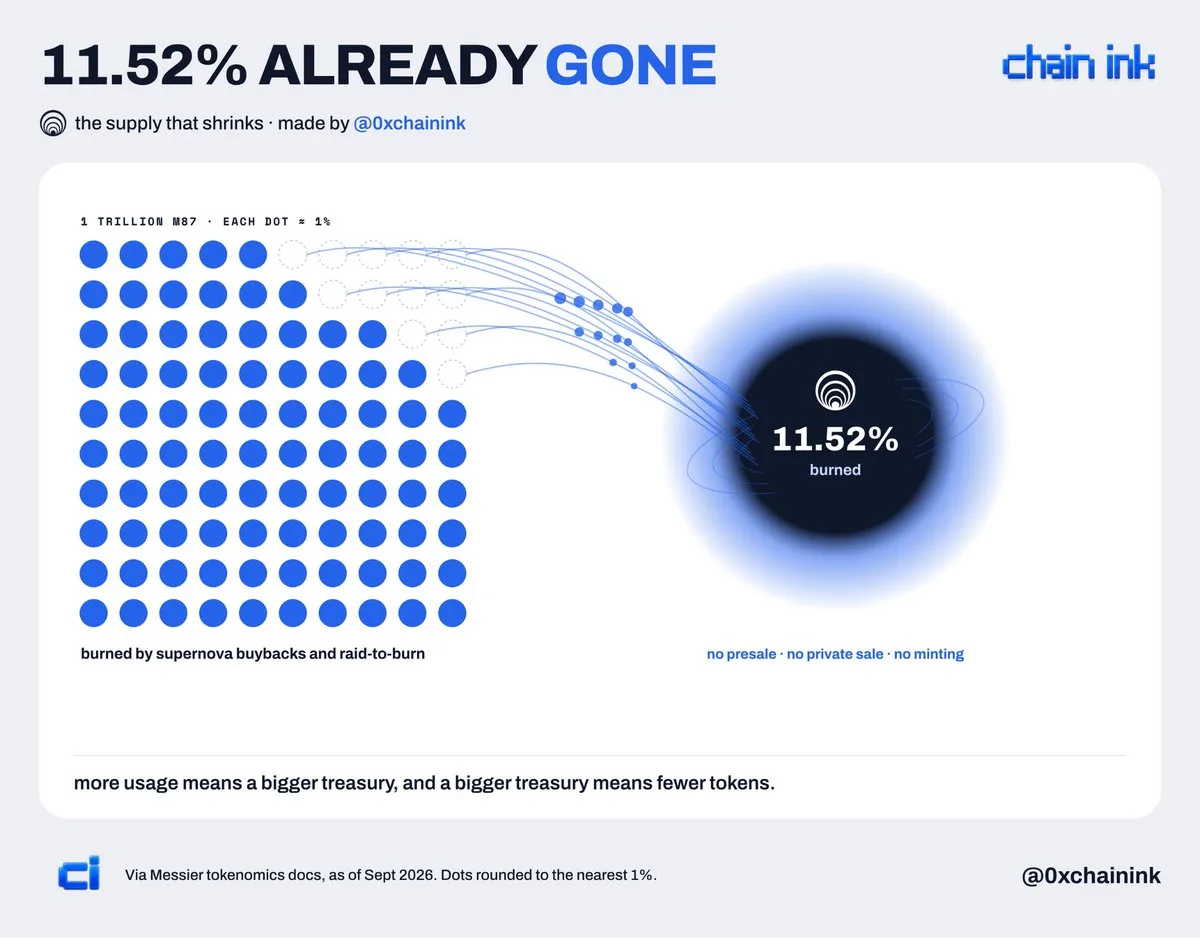
then comes the part with a name only a space nerd could love. once the treasury holds more than 87 eth, the extra triggers a supernova: it buys m87 off the market and burns it.
there's a smaller burn too. raid-to-burn turns community activity into points, and every 10,000 points buys and burns $87 of m87.
as of september 2026, 11.52% of the supply was already gone.
why it works
most tokens ask you to believe the product will one day matter. m87 is wired the other way round.
people trade, send privately, escrow deals and rent gpus. each of those leaves a fee. the fees fill a treasury the holders control. the treasury rewards stakers and burns supply.
more usage means a bigger treasury, and a bigger treasury means fewer tokens.
what to watch
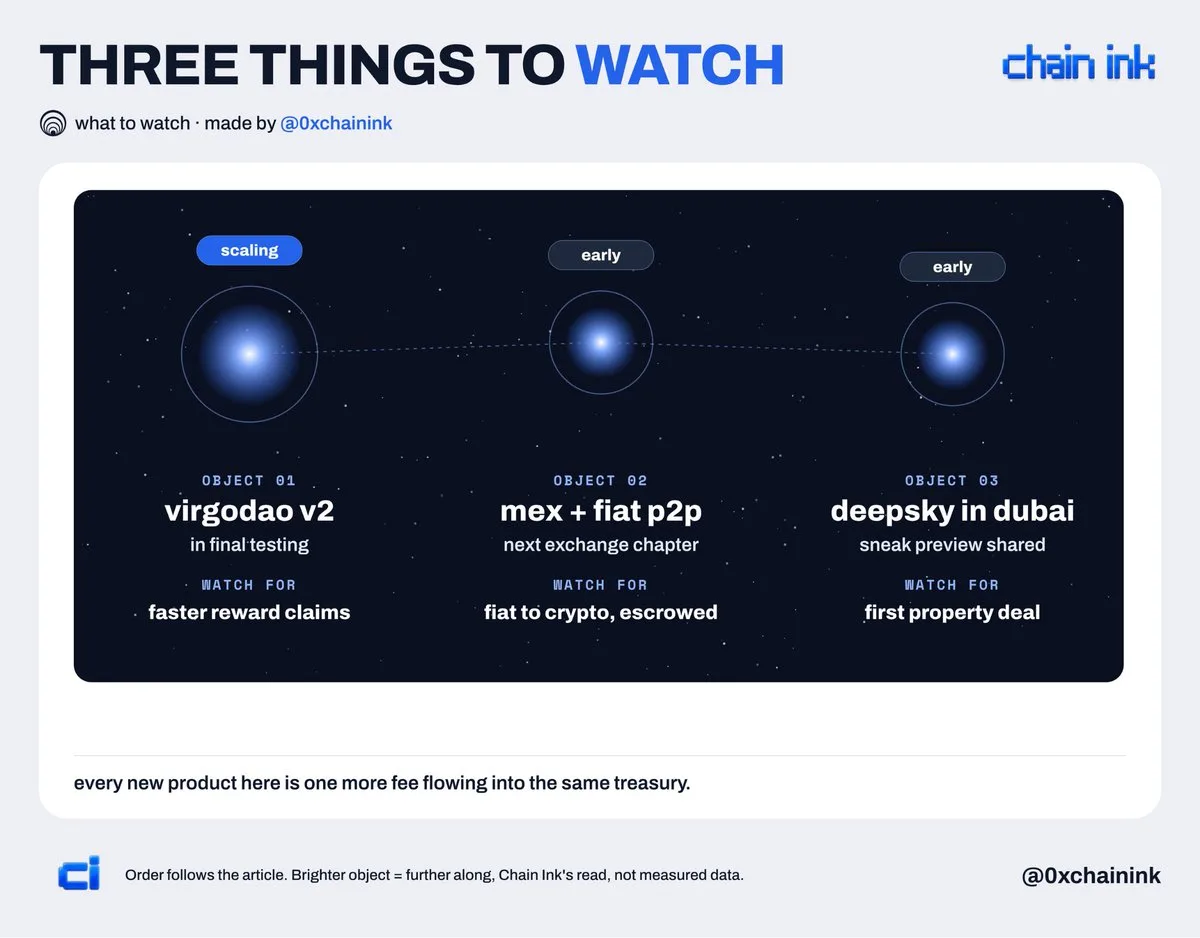
virgodao v2. as of september 2026, the redesigned treasury app was in final testing, with lower gas and faster reward claims. smoother claiming tends to mean more staking.
mex and fiat p2p. the next version of the exchange is set to add fiat-to-crypto trades with on-chain escrow, which opens the door to people who've never touched a dex.
deepsky in dubai. the first pilot of tokenized real estate would put real property deals through openhatch escrow, with fees flowing back to the treasury.
the privacy that grew up
messier 87's black hole was invisible for most of history. it took eight telescopes around the world, working as one, to finally see it.
the project that borrowed its name went the same way. it started as a place to disappear, and has spent the years since 2022 building something you can actually point to: apps people use, a treasury holders run, and a supply that shrinks every time they do.
the ink verdict
CHECKS OUT
the products are live, the fee schedule is public, and the burns and treasury votes are on record. 11.52% of supply was burned as of september 2026.
CAN'T VERIFY
total fee revenue across the apps. treasury and burn numbers come from messier's own docs and dashboards.
WATCH
virgodao v2 shipping, fiat p2p on the exchange bringing in people who've never used a dex, and the first deepsky property deal in dubai.
did this survive your dyor?
tap the heart to fill it with ink. up to 10 drops.
tanishq bodh
runs chain ink from a laptop with 40 tabs open. 39 are whitepapers, one is fpl.